Coup de cœur
With the Franco-Moroccan Illustrator La Bulle
His distorted drawings, often featuring solitary figures suspended in a neutral space, challenge our emotional perspectives on what we know about the world and, above all, about what it means to be human. For their creator, it is not enough to please; rather, the aim is to unsettle, to question, and to leave a lasting impression—as if, between the visible and the invisible, there were a third path: that of raw truth, where the workings of the mind, inner conflicts, and the areas of uncertainty that make up our identity are more readily revealed. Their creator, La Bulle, is our Favorite Artist.
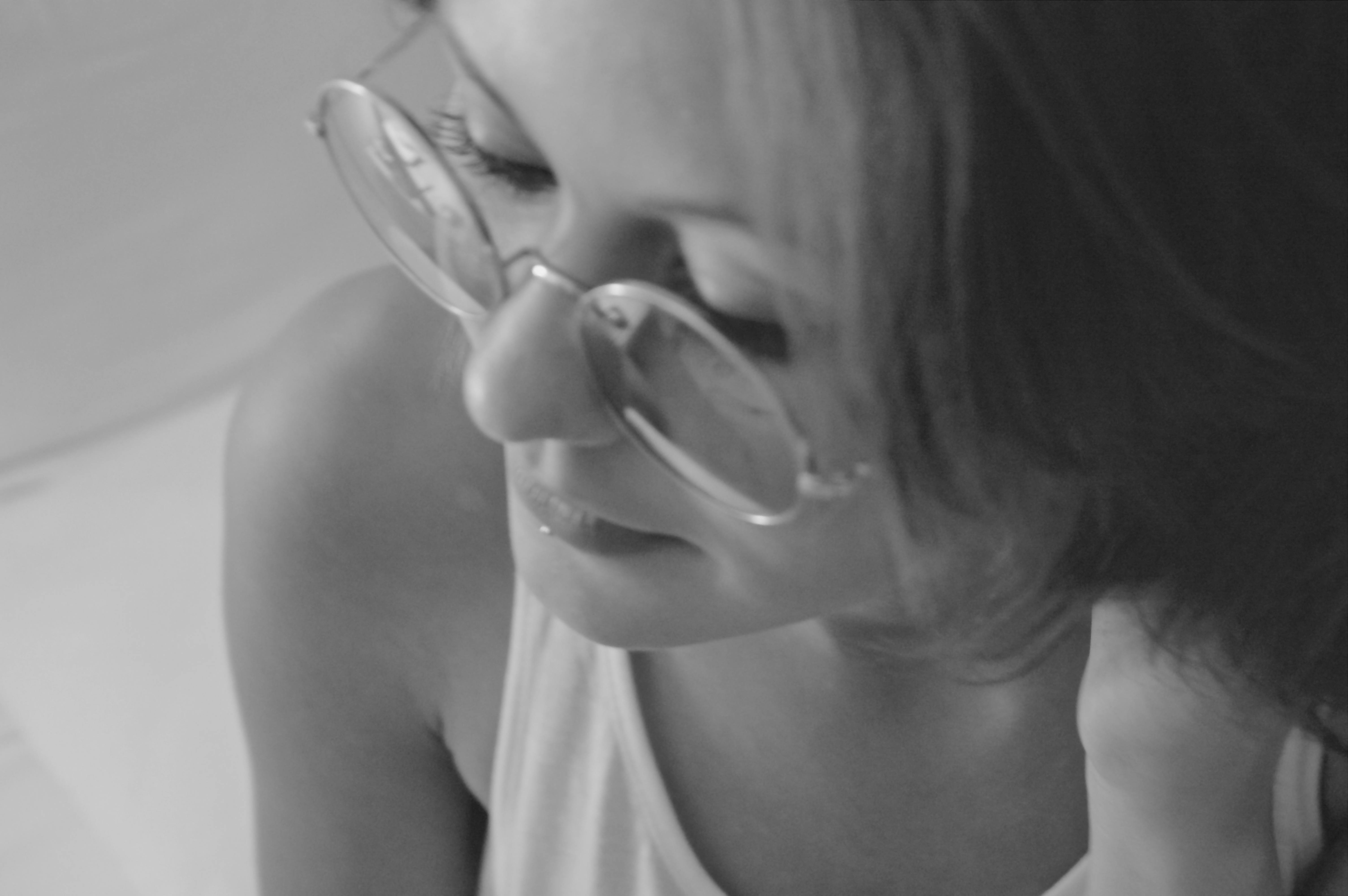
Asakan: To start our interview, would you like to introduce yourself?
La Bulle: I’m an emerging French-Berber-Moroccan artist, and I’ve chosen to sign my works “La Bulle.” This choice is not insignificant. It stems from a reflection on the different components of my identity—my French roots, my Berber and Moroccan heritage, and the ancestral knowledge of North Africa. These heritages shape my perspective on the world, on the evolution of humanity, and on the tensions between memory, identity, and modernity.
My pseudonym, La Bulle, also echoes my vision of what humanity has become through the prism of the Western gaze. It is both revealing and protective in the face of this gaze’s influence on our relationship with the world, our origins, and ourselves.
My work lies at the crossroads of psychology, symbolism, and the fantastical. I enjoy exploring this territory where reason rubs shoulders with madness, where shadow can protect, light can blind, and emptiness can be charged with presence.
It is in this reversal of meanings that I find much of my artistic freedom. I like that my images can oscillate between wisdom and madness, control and chaos, beauty and strangeness. The fantastical then emerges as an extension of reality, a way of representing inner landscapes that logic alone cannot fully explain.
Black and white have become my preferred artistic language. They allow me to explore this divide between control and chaos, revealing a form of truth—sometimes uncomfortable, sometimes contemplative.
My works are like mirrors held up to the viewer. Everyone can discover a part of themselves in them through what they imagine or feel. I do not seek to provide answers, but rather to raise questions, open up new perspectives, and leave room for each person’s own interpretation.
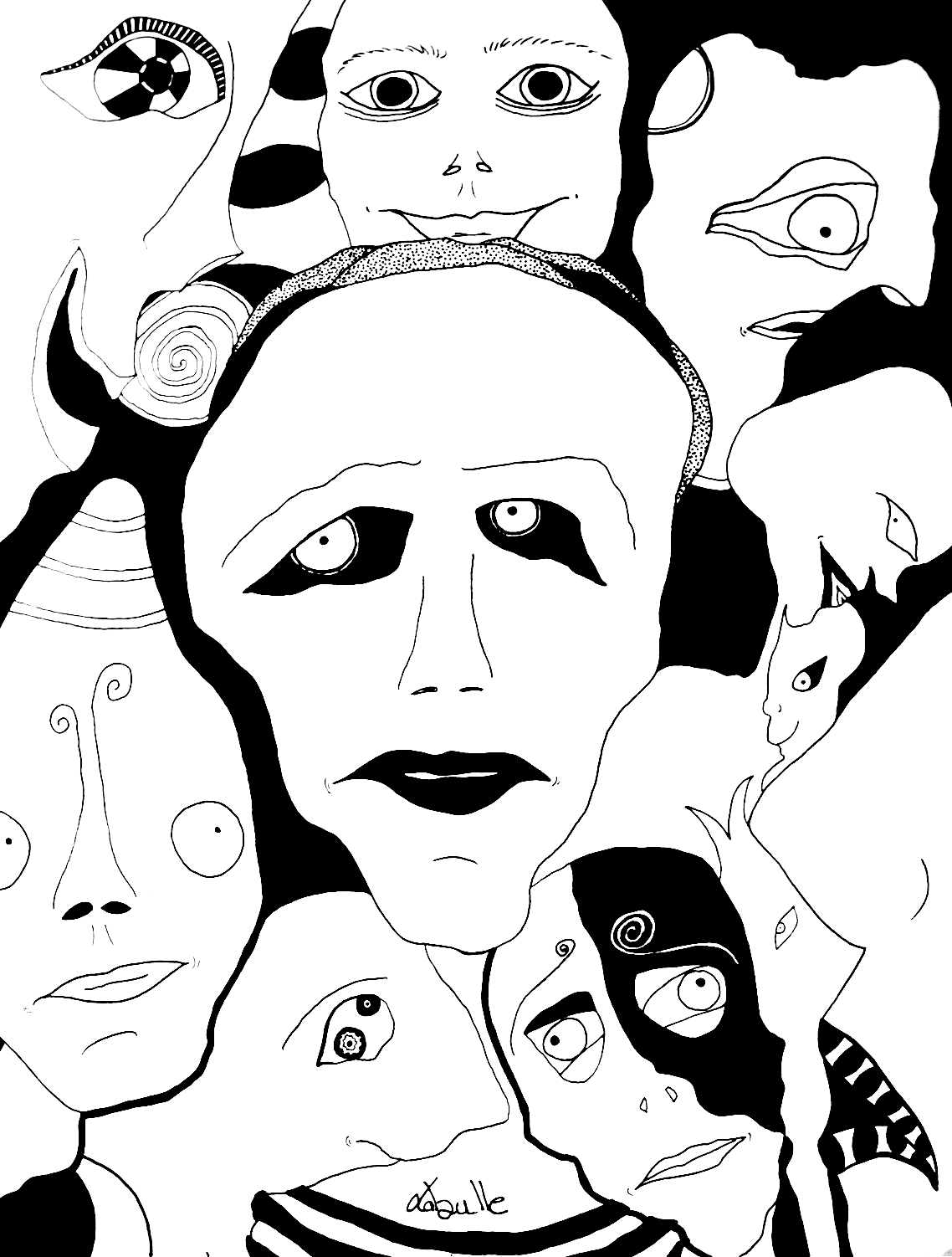
La Bulle, “Circuit Neuronal,” 2015. Drawing on 180 g/m² acid-free art paper / Black marker; India ink, 32 x 24 cm. Courtesy of the artist
Asakan: How would you define art? And how do you perceive contemporary art?
La Bulle: For me, art is a language that allows us to express the inexpressible, to question our certainties, and to open doors to realities we carry within us without necessarily being aware of them. It can also unsettle us, provoke an emotion, or prompt reflection on human intelligence in its rawest form—free from conditioning, conformist upbringing, and purely academic conventions.
As for contemporary art, I sometimes define it—with a touch of humor—as “art that’s content with nothing.” But behind this phrase lies, above all, a sincere question: what makes a work of art? Is it the intention, the gesture, the way it is viewed, or the meaning each person attributes to it?
In my view, contemporary art is above all a space of freedom and reinvention, for artists as much as for viewers. A space where the boundaries between disciplines, cultures, and imaginations are becoming increasingly porous, and where artists can challenge conventions to tell the story of their era through new languages. That said, I don’t believe a work of art must necessarily be understood to be interesting. It can move, unsettle, or provoke questions without its meaning being immediately apparent. Because, in my view, what matters most is not always understanding, but feeling, questioning, and, sometimes, simply being happy for no reason at all...
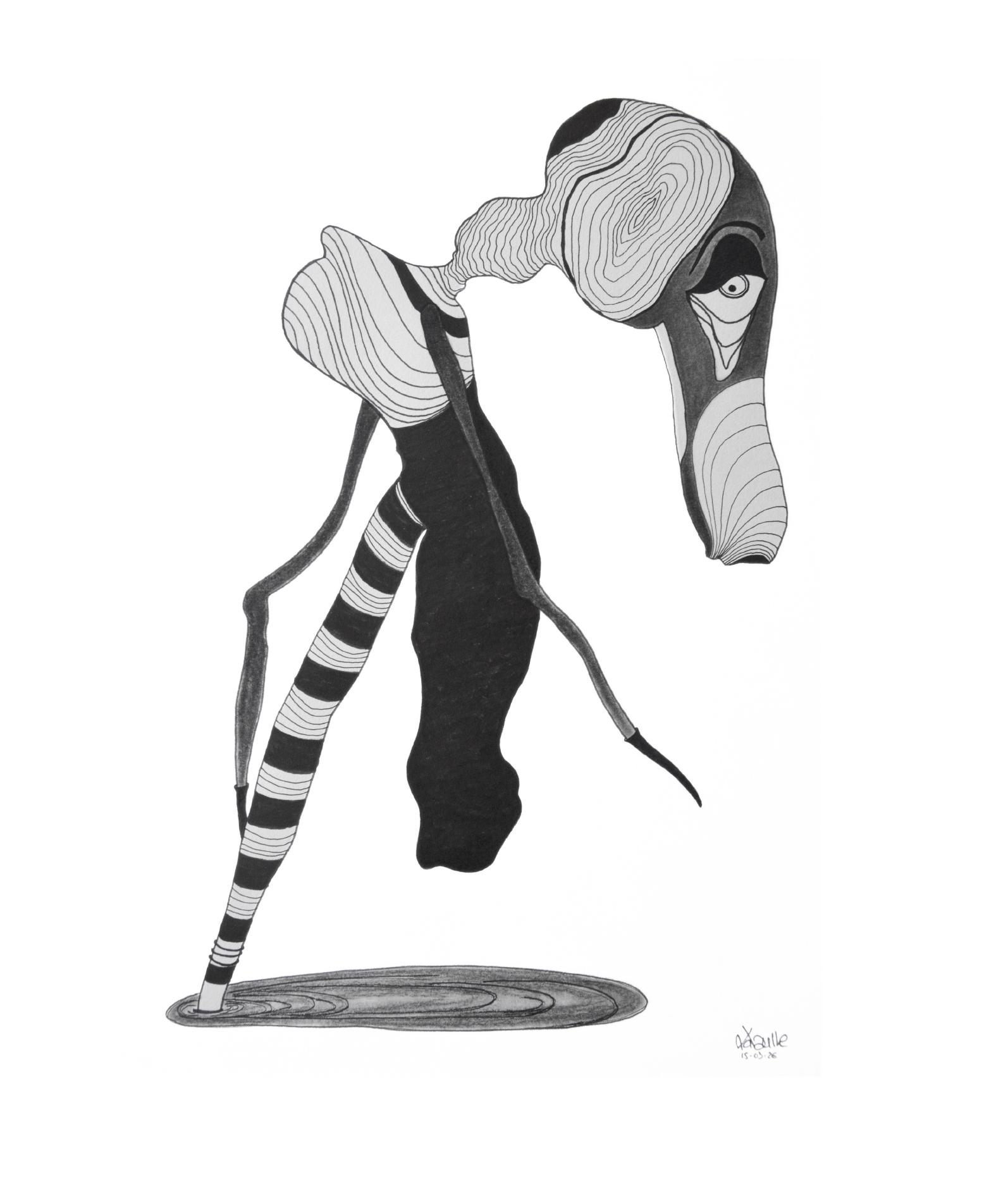
La Bulle, “The Alchemist of Water,” 2026. Drawing on 130 g/m² acid-free art paper / Conté; India ink, 40.5 x 29.5 cm. Courtesy of the artist
Asakan: When did you realize you would devote your life to art?
La Bulle: I don’t think I ever really made that decision. I’ve always drawn “invisibly,” until recently, when I wanted to share my work. After that, everything happened very quickly.
I gradually came to understand that what drew me wasn’t just the act of creating, but the possibility of establishing a dialogue between my inner world and that of others. It was this capacity for resonance that convinced me to pursue this path.
Today, I view my journey as an ongoing exploration. Each work is a step, each experiment a discovery, and every glance at my work a new possibility for meaning—a body of work that evolves over time, capable of growing, transforming, and leaving a unique imprint.
What truly drew me to art is the possibility of giving existence to the invisible. A thought can become a form, a contradiction can take the shape of a creature, and an emotion can be expressed through a contrast, a spiral, or an anatomical distortion. Creating allows me to give structure to what, in the mind, sometimes remains confusing, shifting, or elusive. It’s a way of transforming chaos into composition, without stripping it of its mystery.
However, I don’t think anyone ever decides to devote themselves entirely to art without continuing to question themselves. There are periods of doubt, exploration, and self-reflection that are part of the journey. But the further I go, the more I understand that my artistic world is a territory I need to explore.
Asakan: As an artist, how would you define yourself? How did you come to establish your artistic style?
La Bulle: I’d define myself as a builder of mental images, where reason sometimes loses its way a little; a wanderer through the meandering paths of the mind, where thoughts disguise themselves; and a collector of human contradictions, where emotions can vanish in a matter of seconds.
My world has taken shape through these meditative explorations, like an inner journey where the imagination sometimes takes unexpected turns. Little by little, my artistic voice has taken shape around a quest for tension and balance, driven by a contrasting aesthetic, a strong psychological dimension, and forms that invite the viewer to look beyond their immediate appearance.
My work seeks to give visual presence to the workings of the mind, to inner conflicts, and to the areas of uncertainty that make up our identity.
Black and white play a central role in this exploration. They are not merely aesthetic choices, but genuine tools of storytelling. Black can evoke the unconscious, secrecy, vertigo, or depth. White can suggest emptiness, revelation, silence, or a form of rebirth. However, in doing so, I do not seek to impose a definitive interpretation; rather, I wish to create works that retain an element of mystery, that resist a hasty gaze, and that reveal new nuances over time.
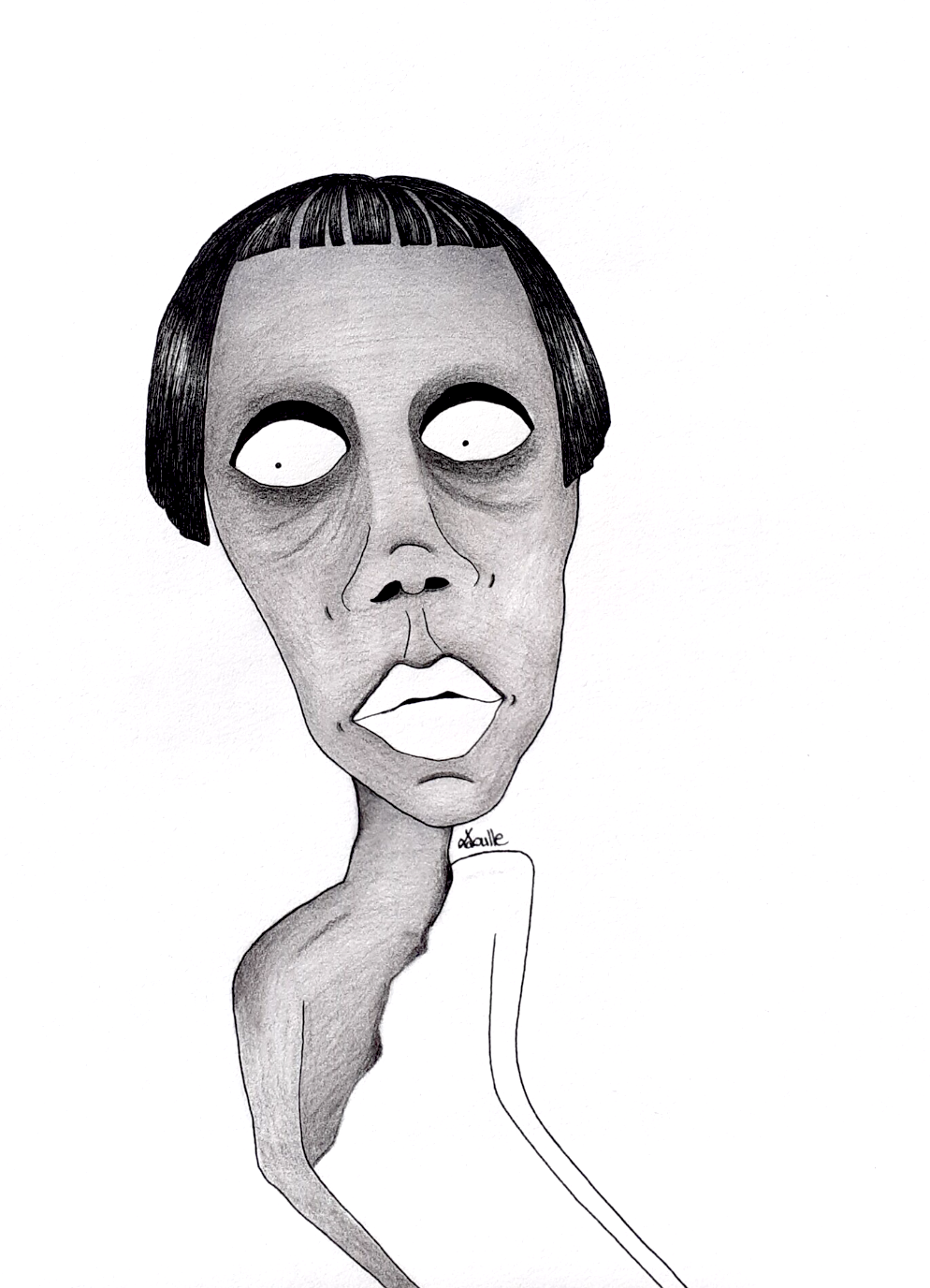
La Bulle, “Observing Silence,” 2025. Drawing on 130 g/m² acid-free art paper / Graphite pencil; Charcoal; Indian ink, 40.5 x 29.5 cm Courtesy of the Artist
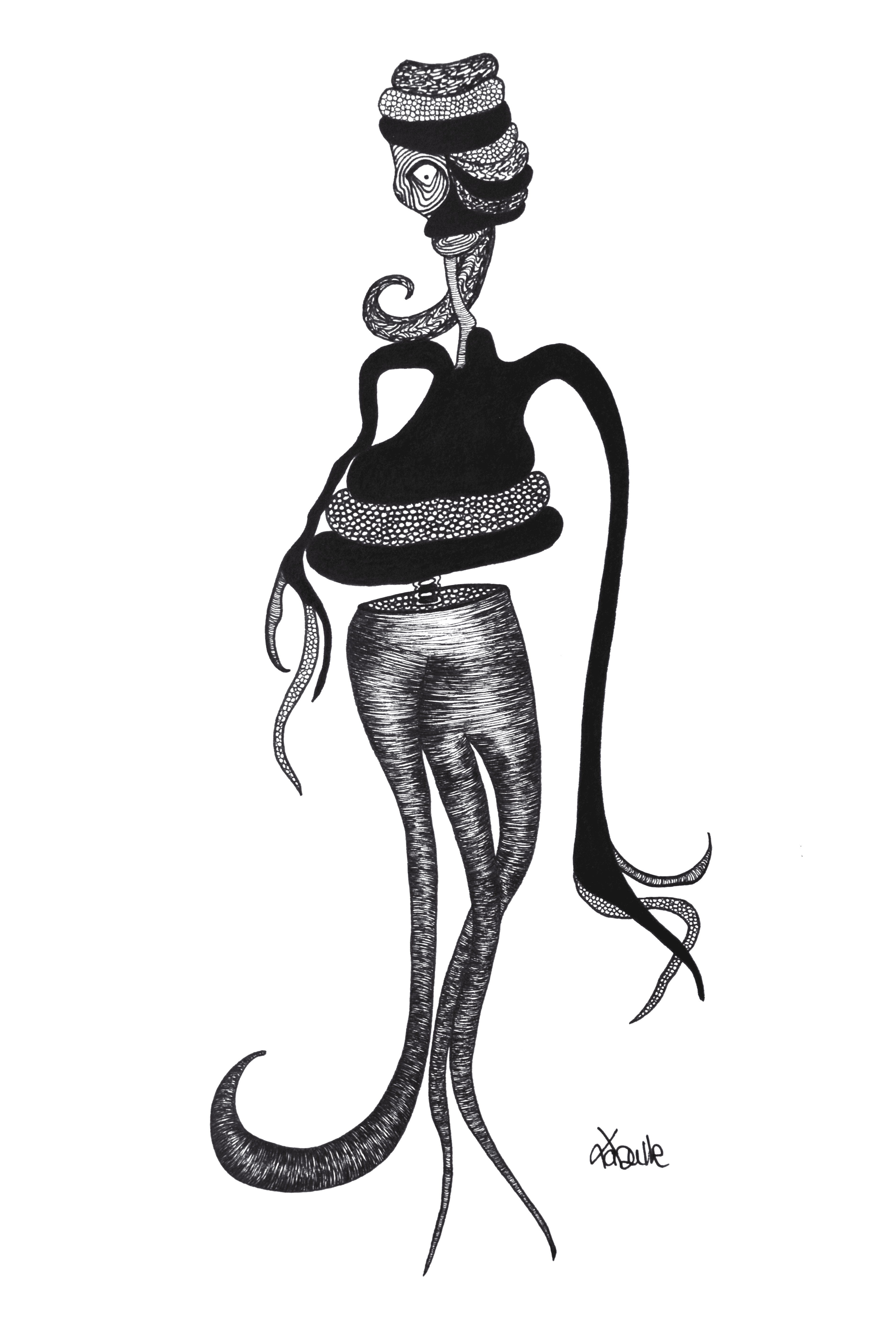
La Bulle, “Le Silence du Serpent,” 2026. Drawing on 130 g/m² art paper (acid-free) / India ink; charcoal; graphite, 40.5 x 29.5 cm Courtesy of the Artist
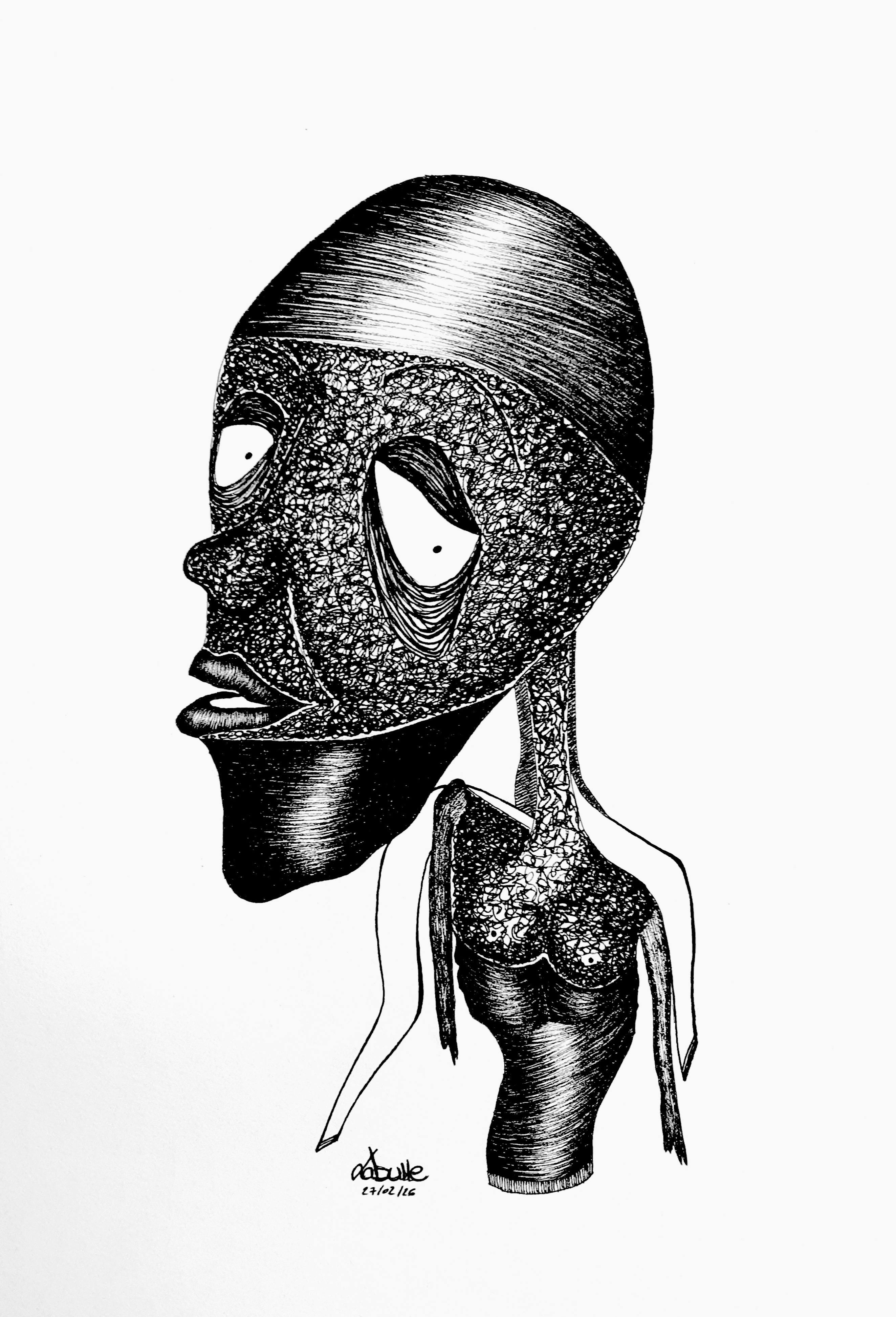
La Bulle, “Noisy Silence,” 2026. Drawing on 130 g/m² art paper (acid-free) / Black marker; India ink, 40.5 x 29.5 cm Courtesy of the Artist
Asakan: What are your artistic inspirations and influences? What themes and emotions do you try to convey in your works?
La Bulle: When I draw, I like to think that my brain becomes the office of humanity.
From an artistic perspective, I often seek to illustrate what’s happening behind my eyes, as if two parallel worlds coexist within me and face each other. One, conditioned by Western values, is trapped in chaos and suffering. The other, African in spirit, free to create, feel, and explore the full spectrum of emotions.
The lines in my drawings are instinctive or influenced by what I encounter in the details of everyday life—the forms of nature, unusual faces, distinctive silhouettes, and associations of ideas that spring to mind without warning. They can give form to a thought that twists in on itself, a face to an inner state, or an unexpected shape to an emotion that’s hard to name. The line then becomes a kind of mental map, filled with clues, symbols, and paths that everyone can follow in their own way.
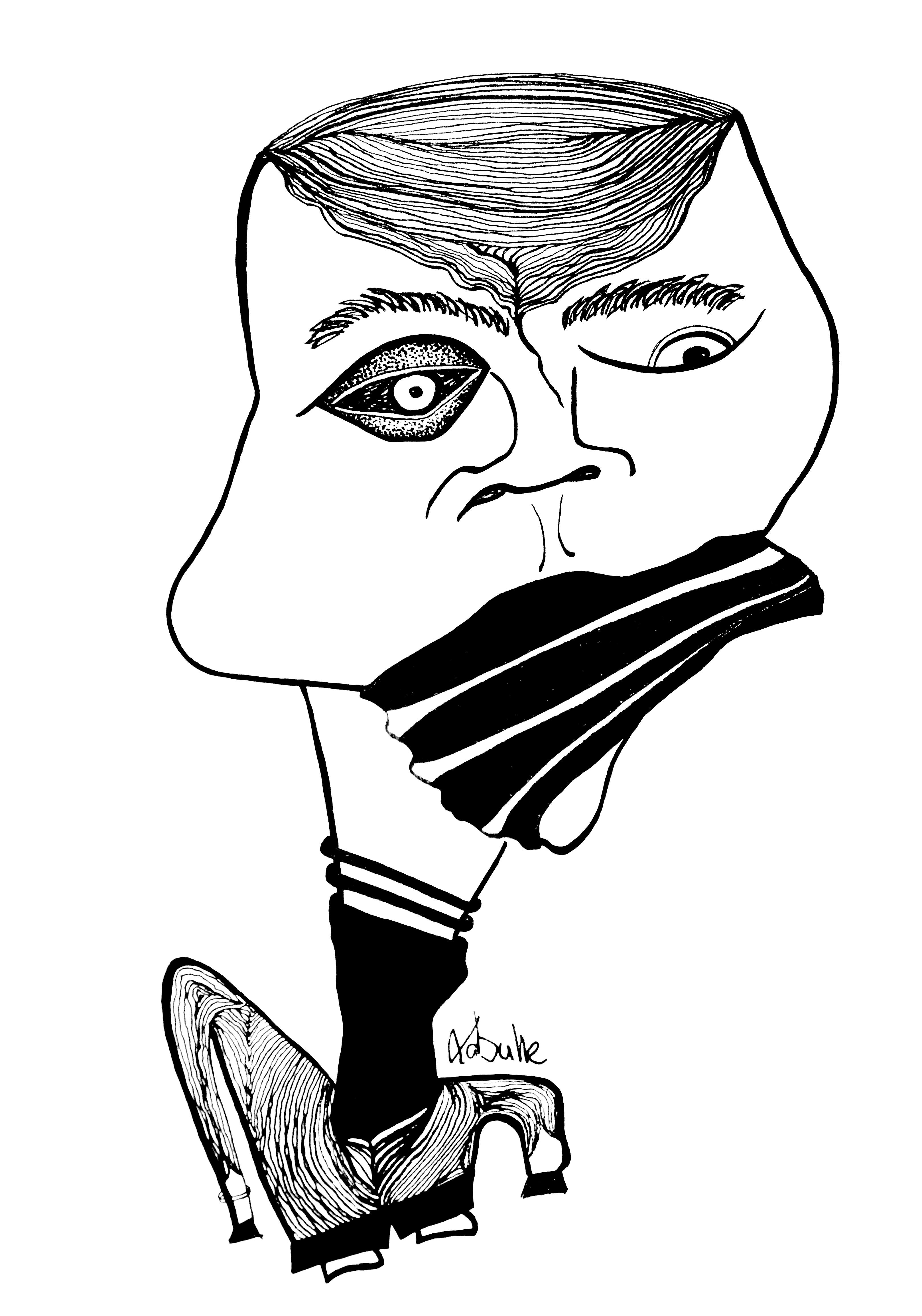
La Bulle, “D.Form,” 2026. Drawing on 130 g/m² art paper (acid-free) / Black marker; India ink, 40.5 x 29.5 cm Courtesy of the Artist
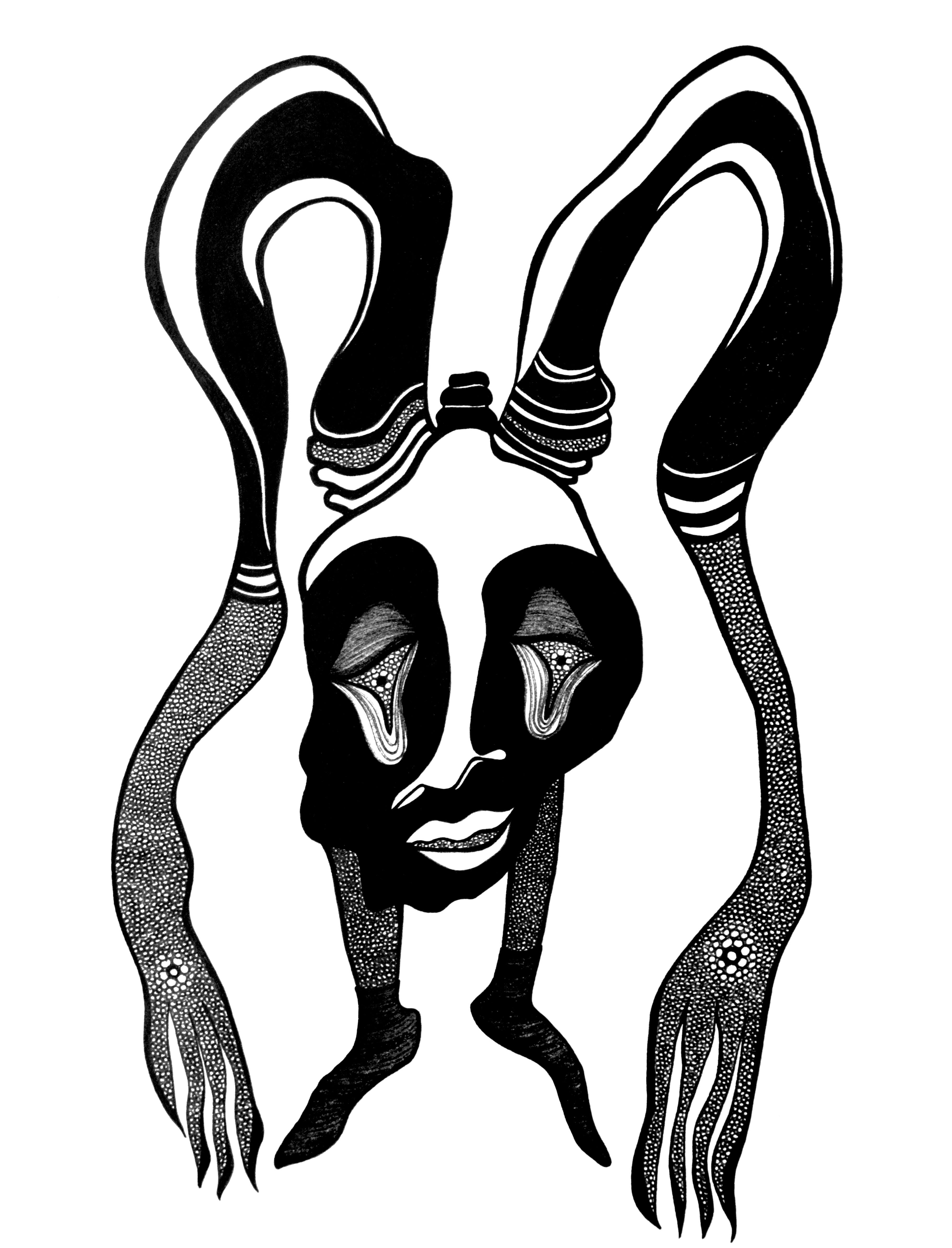
La Bulle, “Dependence on Addiction,” 2026. Drawing on 130 g/m² acid-free art paper / India ink; charcoal, 40.5 cm x 29.5 cm. Courtesy of the artist
Asakan: How is your work perceived by the public? And by the art world?
La Bulle: My work elicits reactions that often go beyond mere aesthetic judgment. Some are drawn to its graphic quality, others to its psychological depth, its strangeness, or the emotions it evokes. In particular, I’ve seen the same piece make one person feel uncomfortable, while another found it soothing and a form of escape. These sometimes contradictory perceptions fascinate me, as they illustrate the complexity of the human condition, which lies at the heart of my artistic practice.
Within the art world, my body of work is particularly noted for its psychological approach, its contemporary character, and the power of its black-and-white compositions. And it is precisely in this direction that I hope to develop La Bulle and affirm its unique identity, drawing on my cultural heritage, my observations of humanity, and my freedom of interpretation.
Asakan: What advice would you like to share with other young people eager to pursue a career in art?
La Bulle: First, I’d tell them to take the time to discover what truly makes them unique. You have to experiment, make mistakes, try again, and accept that your artistic identity doesn’t always reveal itself right away. A strong artistic approach is built over time, through hard work, observation, curiosity, and the ability to question your own certainties.
Don’t be afraid of vulnerability. Art can emerge from our flaws, our doubts, and our contradictions. What we sometimes try to hide can become the most authentic material for our expression. The journey may be uncertain, but every completed work, every encounter, and every experience helps shape a path.
Finally, I would tell them not to confuse visibility, immediate success, and artistic value. It’s not just about creating images that the world will look at, but images that will offer the world a different way of looking at itself.
------------------------
For more information on La Bulle’s work, visit the website www.artmajeur.com/la-bulle or follow their Instagram account @labulle023_art.
À lire également
With Karine Taïlamé, a multidisciplinary artist and exhibition curator from Martinique
Born in Martinique and a graduate of the Fine Arts schools in Martinique, Nice, and Paris, as well as the Haute École de Joaillerie in Aix-en-Provence…

With French Artist and Curator Isabelle Arvers
A pioneer in art and video games in France, as well as a curator and painter, Isabelle Arvers (born in 1972) grounds her work at the intersection of a…
With Violine Jacquot, a French painter based in Lausanne
Violine Jacquot, who was born and raised near Besançon, France, is a self-taught painter who lives and works in Lausanne, Switzerland. Inspired by the…
With Paul Moustapha Ledron, an artist and designer of Martinican origin based in Abidjan
At just 30 years old, Paul Ledron is a young designer whose work draws on Caribbean, African, and European cultural influences. With a master’s degree…
Commentaires