Le Grand Entretien
Yasmine Kechad: “I would describe KECHAD as an independent organisation that allows me to engage with art in different ways, depending on the artists, the projects and the people I meet.”
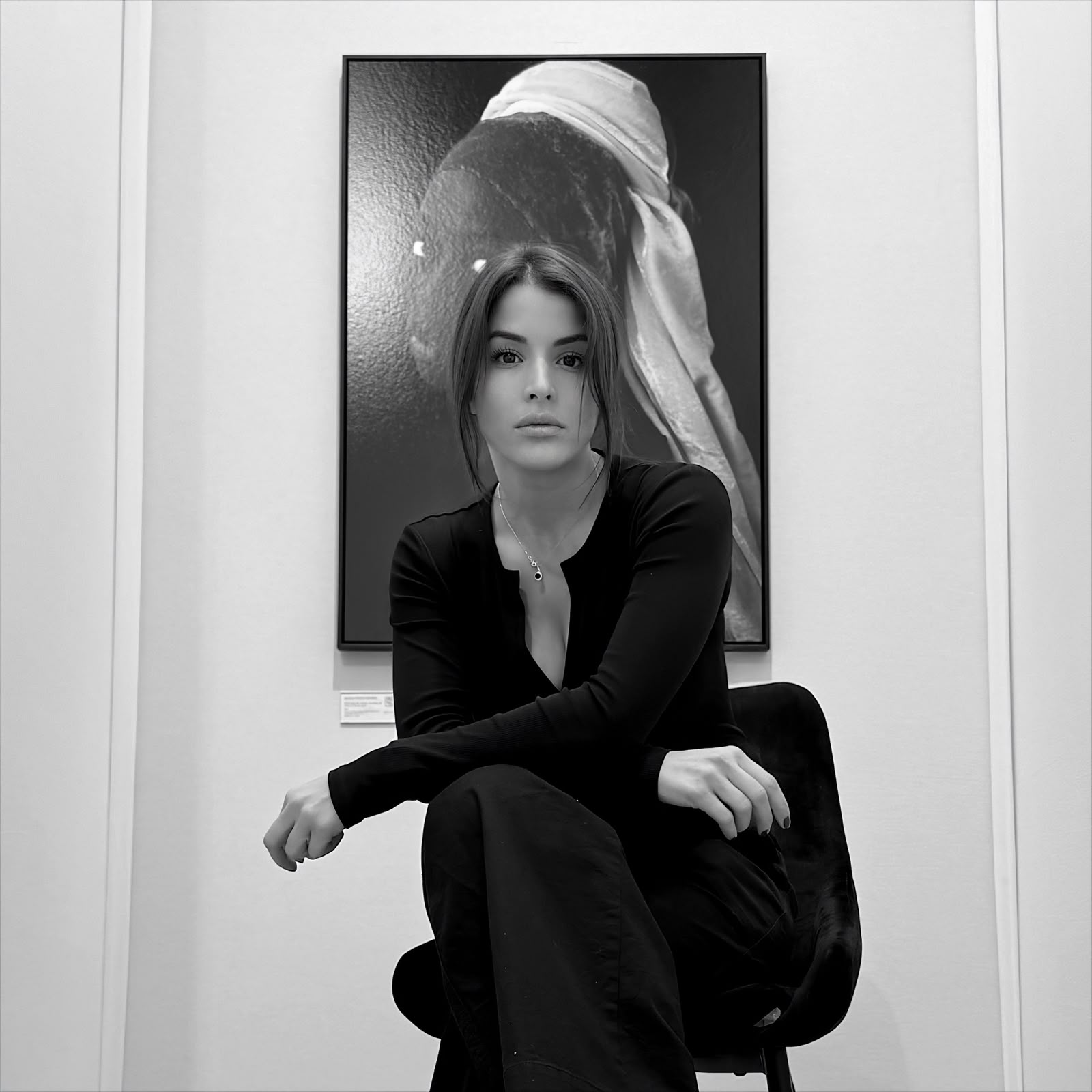
The newly launched KECHAD platform is participating in its first Paris Photo fair through November 15, 2026, in collaboration with the Carole Kvasnevski Gallery. This is an opportunity to meet its founder, Algerian curator Yasmine Kechad, and to learn more about this independent and flexible platform dedicated to supporting and showcasing contemporary artistic practices in a more human way. Interview.
Asakan: Where does your love of art come from?
Yasmine Kechad: I’m naturally very sensitive to beautiful things. I feel beauty deeply and try to see it where others don’t necessarily take the time to look for it. It can be in a work of art, of course, but also in a landscape, a light, a detail or an encounter. I’ve always been drawn to worlds that have a story to tell, something that goes beyond what meets the eye.
I believe art has always been part of the way I see the world. It teaches us to observe differently, to pause and notice details we don’t always pay attention to. There is also that element of silence and contemplation which I find essential. A work of art does not always need to explain something to us in order to move us.
Over time, this love has become a vocation, then a profession. But I believe that curiosity remains the starting point for everything.
Asakan: Since then, you’ve gone on to complete a Master’s degree in contemporary art history and have had a remarkable career. Could you tell us about it?
Yasmine Kechad: My career path has been shaped by the intersection of several different worlds. I started out at art school, where I discovered and practised painting, before switching to a business school. I’ve always felt a sense of frustration at not having pursued that initial path, but in the end I never really strayed far from art.
I then moved into the worlds of communications, branding and project development, particularly in Algeria, where I worked with major companies and international brands. This experience taught me a great deal about how to build an identity, tell a story and raise the profile of a project.
But communications is also a profession that sometimes leaves little room for one’s own creativity. It’s a different kind of creativity, of course, but one sometimes ends up devoting so much time to other people’s projects that one no longer takes the time to do what truly inspires us.
At one point, I felt the need to return to what had always drawn me in. So I went back to university and completed a Master’s degree in contemporary art history in Paris.
I then had the opportunity to run a gallery, work with artists, collectors and museums, and take part in various art fairs and exhibitions. In particular, I supported the artistic and commercial development of a Parisian gallery. Beyond the roles and experiences themselves, this journey has, above all, enabled me to understand the different realities of the art world: those of the artist, the collector, the galleries and the museums. I believe that this cross-disciplinary perspective is now one of my greatest strengths.
Asakan: You’ve just launched your independent curatorial platform, KECHAD. What prompted you to create this platform?
Yasmine Kechad: KECHAD arose from an observation, but also from a very personal desire. Through my experiences, I’ve met artists whose work struck me as profoundly interesting, sometimes even essential, but who didn’t always have the right contacts, venues or opportunities needed to showcase their work and situate their practice within a broader context.
I wanted to create a more flexible, independent structure, capable of fostering connections and building bridges between artists, collectors and the various players in the art world.
There was also the question of freedom. I have sometimes felt that, in this milieu, one has to adopt certain codes, follow a certain way of doing things or even of being in order to exist. Yet that is absolutely not the vision I champion. I do not believe there is just one way of doing things, even less so when it comes to art. I didn’t want KECHAD to be forced into a mould.
I’d rather take the risk that things might take longer than to build something that doesn’t reflect who I am or that ends up losing its meaning. I wanted to build something that reflects the way I think and work, and that can evolve freely.
Asakan: Why did you call it KECHAD?
Yasmine Kechad: KECHAD is my surname. It felt quite natural, really, but there’s also a symbolic aspect to this choice. I wanted to take responsibility for what I’m building. In the art world, trust is fundamental. Putting my name to this organisation means committing my sensibility, my perspective and my responsibility.
But I didn’t want KECHAD to be merely a personal signature. I’d like the name to gradually become an identity, a space for encounters and projects, with a vision that can exist beyond myself.
Asakan: KECHAD is neither a gallery nor simply a marketplace, let alone an auction house. How would you define it in a few words?
Yasmine Kechad: I would define KECHAD as an independent organisation that allows me to work with art in different ways, depending on the artists, the projects and the people I meet.
We are not tied to a permanent physical location, nor to a traditional model of representation. This freedom allows us to work in a more cross-disciplinary way, to develop collaborations and to devise projects without imposing any particular limits on ourselves.
Curation and curiosity are truly at the heart of our approach. What interests me isn’t simply showing works, but understanding what lies behind them and fostering the right connections.
I really like this idea of movement. KECHAD isn’t meant to be confined to a single structure or territory. Perhaps one day things will take on a different form, but for now, this hybrid format suits us perfectly. It gives us the freedom to explore, to adapt and, above all, not to rule out certain possibilities.
Asakan: What benefits does this model offer to artists, collectors and institutions?
Yasmine Kechad: For artists, it offers, above all, support that goes beyond simply marketing their work. It involves understanding their practice, reflecting on their positioning, working to enhance their visibility, and opening up opportunities for collaborations and connections.
For collectors, we offer a curatorial perspective and guidance in discovering and building coherent collections. The idea is not simply to advise on a purchase, but to understand the sensibility, history and intention behind an acquisition.
As for museums, foundations and cultural organisations, I would like KECHAD to build bridges with them, facilitate meetings, devise exhibitions and develop collaborations that enable artists to access new spaces for dialogue. This is a process that develops over time.
Our independence is precisely what allows us this freedom of dialogue and action.
Asakan: How do you select your artists?
Yasmine Kechad: I don’t think there’s a universal formula or selection criteria. I rely heavily on gut feeling and intuition, but it’s an intuition that’s also informed by knowledge, research and a certain amount of practical experience.
And I’d even go so far as to say that the person matters just as much as the work. It’s important for me to meet the artist, to understand their personality and their way of seeing things. We need to be on the same wavelength, to share certain values and a common vision. That’s essential for me.
Artistically speaking, I am drawn to the uniqueness of an artist’s approach, the coherence of their artistic language and their ability to develop a world of their own. I am also interested in artists who take risks, who explore sometimes complex territories and who do not necessarily seek to cater to market trends.
I do not seek to represent a large number of artists. I prefer to champion a select few whose work I understand deeply, with whom I can build a genuine relationship of trust, and in whom I believe.
Asakan: Beyond the platform, KECHAD also offers advice and support on building collections, curating exhibitions and organising in-person artistic collaborations. Could you tell us more about this?
Yasmine Kechad: Yes, because I believe that work in the field of art cannot be limited to its presentation on a digital platform.
Advising collectors is an important part of what we do. Building a collection is a very personal process. You have to know how to listen and understand each person’s tastes, sensibilities and aspirations. It’s not simply a matter of suggesting works, but of guiding someone in putting together a collection that reflects who they are and that will retain its meaning over time.
Curating exhibitions is another facet of our work. It is something I particularly enjoy, because it allows works to engage in dialogue, creates a narrative and offers an experience to the public.
We also wish to develop collaborations with galleries, museums, foundations and figures from other creative fields. I would like KECHAD to be just as capable of initiating an exhibition in a physical venue as it is of fostering an unexpected artistic collaboration or an international project.
Ultimately, what interests me is not imposing a single form on art, but allowing it to exist in different spaces and in different ways.
Asakan: Speaking of which, you are currently taking part in your first Paris Photo fair with the artist Maya Inès Touam, in collaboration with the Galerie Carole Kvasnevski. Was it a necessity to take part?
Yasmine Kechad: I would describe it more as an important step than a necessity.
Paris Photo is a major international art fair, bringing together artists, galleries, collectors, museums and professionals from all over the world. For KECHAD, taking part represents a first concrete step in the organisation’s development. It has come about through a collaboration with Galerie Carole Kvasnevski.
Carole and I share values and a vision of the art world that are quite similar. It was important to me to work with someone with whom dialogue came naturally and with whom I could build genuine synergy.
We wanted to create a stand where gazes meet, by bringing together four remarkable African women artists: Zanele Muholi, Angèle Etoundi Essamba, Hélène Amouzou and Maya Inès Touam. I am very proud of the result, both for the calibre of the artists we have brought together and for the energy we have managed to infuse into this space.
And there is something that particularly moves me about this participation: seeing KECHAD, an Algerian organisation, take part in one of the major international photography events. It is a source of personal pride, but also symbolic pride. Being able to showcase the work of an Algerian artist there, alongside a Parisian gallery with which we share the same vision, gives this collaboration a special significance.
This is obviously not about introducing work that isn’t already recognised. Maya is an artist who has already established herself and built a career in Paris. What interests me here is fostering dialogue between different organisations, sensibilities and art scenes. It is precisely this kind of synergy that I would like to continue developing with KECHAD.
Asakan: What is it about Maya Inès Touam’s work that appeals to you so much?
Yasmine Kechad: What draws me to Maya’s work is, first and foremost, the power of her images. There is a precision in the composition, an attention to detail and a genuine mastery of the image. Beauty is very much present, but it is never gratuitous.
I particularly like this tension between aesthetics and reflection. Her works explore issues of memory, identity, heritage and representation, without ever confining the viewer to a single interpretation.
What I appreciate is that they do not reveal all their secrets straight away. They invite you to return, to look at them differently, to form your own interpretation. I love works that give the viewer that freedom.
Asakan: What would success look like for KECHAD at the end of this fair and in five years’ time – not in terms of sales, but in terms of cultural impact?
Yasmine Kechad: If, in five years’ time, KECHAD has helped to open up new opportunities for the artists we work with — new encounters, collaborations, a presence in public and private collections, and dialogue with museums and art scenes internationally — then I will consider that we have achieved something significant.
At present, my focus is particularly on Algerian artists and those with roots in regions whose art scenes are sometimes under-represented internationally. But I have absolutely no wish to reduce KECHAD to a geographical area. Algeria is part of my history and a place to which I am deeply attached. It is also an artistic landscape of considerable richness. But my vision is broader: I want to be able to work with artists from different backgrounds and build bridges between artistic scenes.
True success would be for KECHAD to become a recognised voice, valued for the insightfulness of its perspective, the quality of its choices and its ability to foster lasting cultural dialogues. Above all, I would like the artists we champion to be able to continue developing their work with genuine freedom.
Asakan: Is art really that important in our lives?
Yasmine Kechad: I think art is all around us, even in places where we don’t necessarily think to look for it. Our lives are made up of art, on different scales and in different forms. There is art in architecture, in a landscape, in an object, in a light, in the way a space is arranged. Sometimes, all it takes is simply taking the time to look.
I believe we’ve lost some of that ability to pause. Everything moves so quickly, we’re constantly being pulled in different directions, and we often miss things that really deserve our full attention.
For me, art is also an invitation to silence. There are works of art that you can stand in front of for a long time without necessarily trying to understand or explain anything. Just looking, feeling and letting something come to us. I find this experience invaluable.
Art also teaches us to look at the world differently. It allows us to take a step back, to question ourselves, to escape for a while, but also to confront realities that we might not otherwise have considered.
I think we would benefit greatly from slowing down and paying closer attention to our surroundings. Art is not something that should be confined to museums or a select circle of connoisseurs. It is part of our daily lives, our environment and, in a way, the way we inhabit the world.
Asakan: What advice would you give to those who would like to follow in your footsteps?
Yasmine Kechad: First of all, I’d tell them to develop their own perspective. It’s important to educate yourself, to know art history, to understand the movements, the artists and the market, but you must never lose your ability to look at things freely.
I’d also advise them to get out and about. Visit studios, meet artists, go to galleries, art fairs and museums, look at the artworks and, above all, take the time to understand what lies behind them.
The art world requires a great deal of patience. You have to accept that things take time, build relationships based on trust and learn to work with realities that can sometimes be very different.
Finally, I would tell them not to try to replicate someone else’s path. You have to find your own place, your own voice, and have the courage to stand by a vision, even when it doesn’t immediately align with current trends.
And perhaps most importantly: never lose sight of the artists. Without them, everything else would have no reason to exist.
Asakan: Any final thoughts?
Yasmine Kechad: I’d simply like to remind people that behind every work of art there is a person, a story, a process of exploration and often years of work that aren’t always visible.
My hope with KECHAD is to help give these stories a voice, to make space for them, to offer them new venues for encounter, and to allow unique perspectives to circulate freely.
I firmly believe that certain encounters and certain works come into our lives to open up perspectives we hadn’t previously considered.
Ultimately, what I’d like to champion through KECHAD is the possibility of bringing to life stories that are yet to be discovered, as well as those that are yet to be written. Because I believe that art isn’t merely meant to recount what already exists. It also has the power to give rise to new narratives, new encounters and new ways of looking at the world.
For further information: yasminekechad.com
À lire également
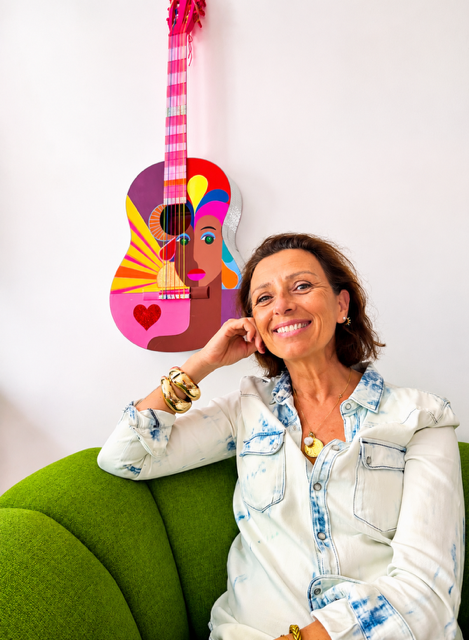
Agi: “Through this exhibition, I wanted to pay tribute to these Amazons, symbols of strength and resilience.”
At La Maison Rouge in Cotonou, painter Agi (born in Paris in 1971) is presenting, through November 29, “Les Merveilleuses,” an original exhibition cel…
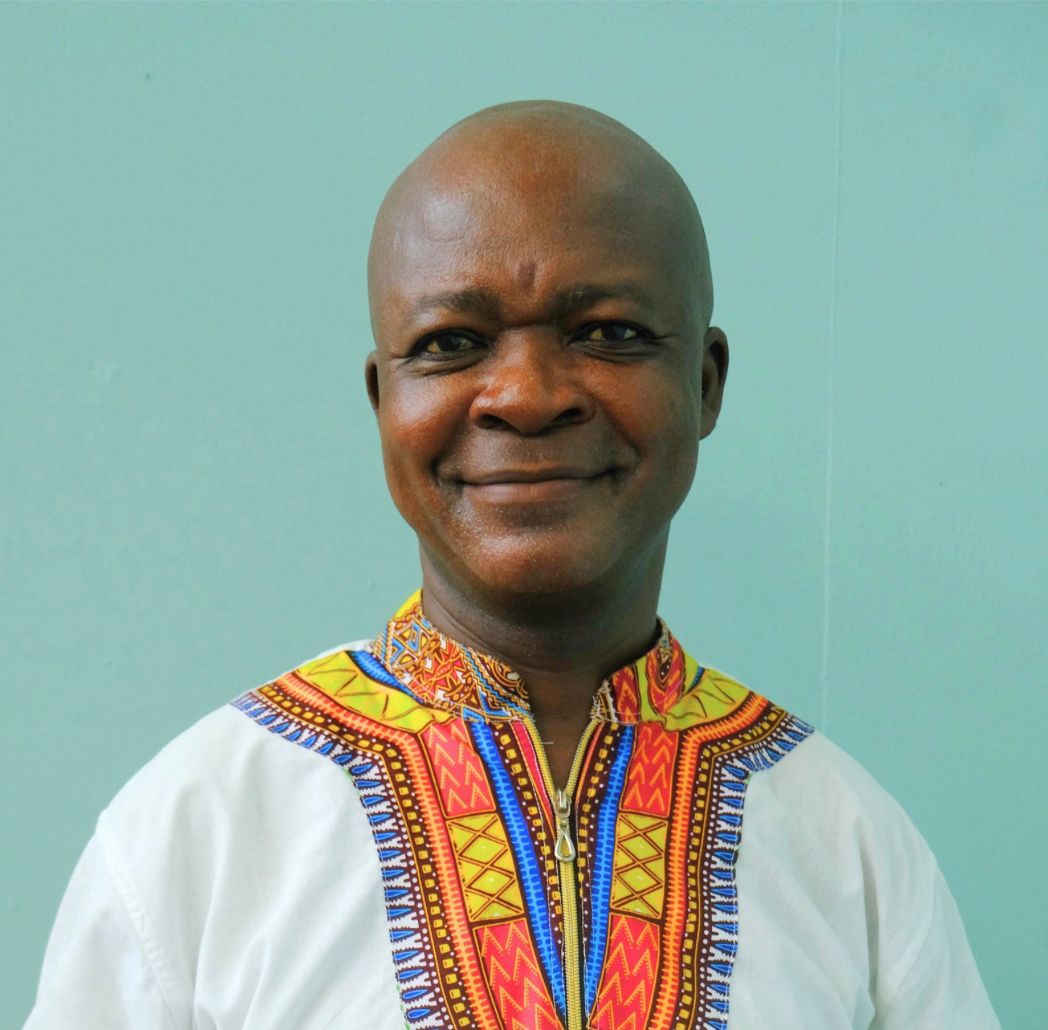
Raymond Tsham: “Belgians and Congolese, Africans and Europeans—we must overcome the divisions of history, unite, and foster genuine complementarity among our peoples.”
Featured in the exhibition “Living Legacies: Reinventing Forms” at the Galerie Person in Brussels alongside Mozambican artist Reinata Sadimba, Raymond…

Joseph Ntensibe: “… I try to capture the dramatic effect of tropical light on nature and translate that experience into painting.”
Today marks the final day of the group exhibition featuring the renowned Ugandan painter Joseph Ntensibe—who trained at the Makerere University School…

Rodrigue Glombard: “To me, these walls and floors are not merely fragments of urban architecture; they are repositories of the traces of time, human stories, and the transformations of the landscape.”
For some time now, we’ve been introducing you to the artists featured in the exhibition “Martinique, Intimate Cartographies,” on view at the Wall Hous…
Commentaires