
Le Grand Entretien
Donald Wasswa: “… my work explores the tension between human progress and our relationship with nature, and how the environment reflects back to us the choices we make.”
The inaugural exhibition, “Matière à abstraction, Echo à l’histoire d’un lieu,” which runs at Galerie PERSON Paris through August 1, 2026, brings together works by six artists—including, notably, three Ugandan artists, among them Donald Wasswa. Born in 1984 in Kampala, where he lives and works, Donald Wasswa uses his artistic vision to explore processes of social and environmental transformation, the influence of science and technology, and the evolving nature of communication in contemporary societies through sculpture, installation, and painting. His presence certainly does not go unnoticed within the gallery’s Parisian walls, at a time when the debate rages between the implementation of environmental policies and economic growth. To learn more, Asakan met with him on your behalf, with the help of Anaïs Auger-Mathurin.
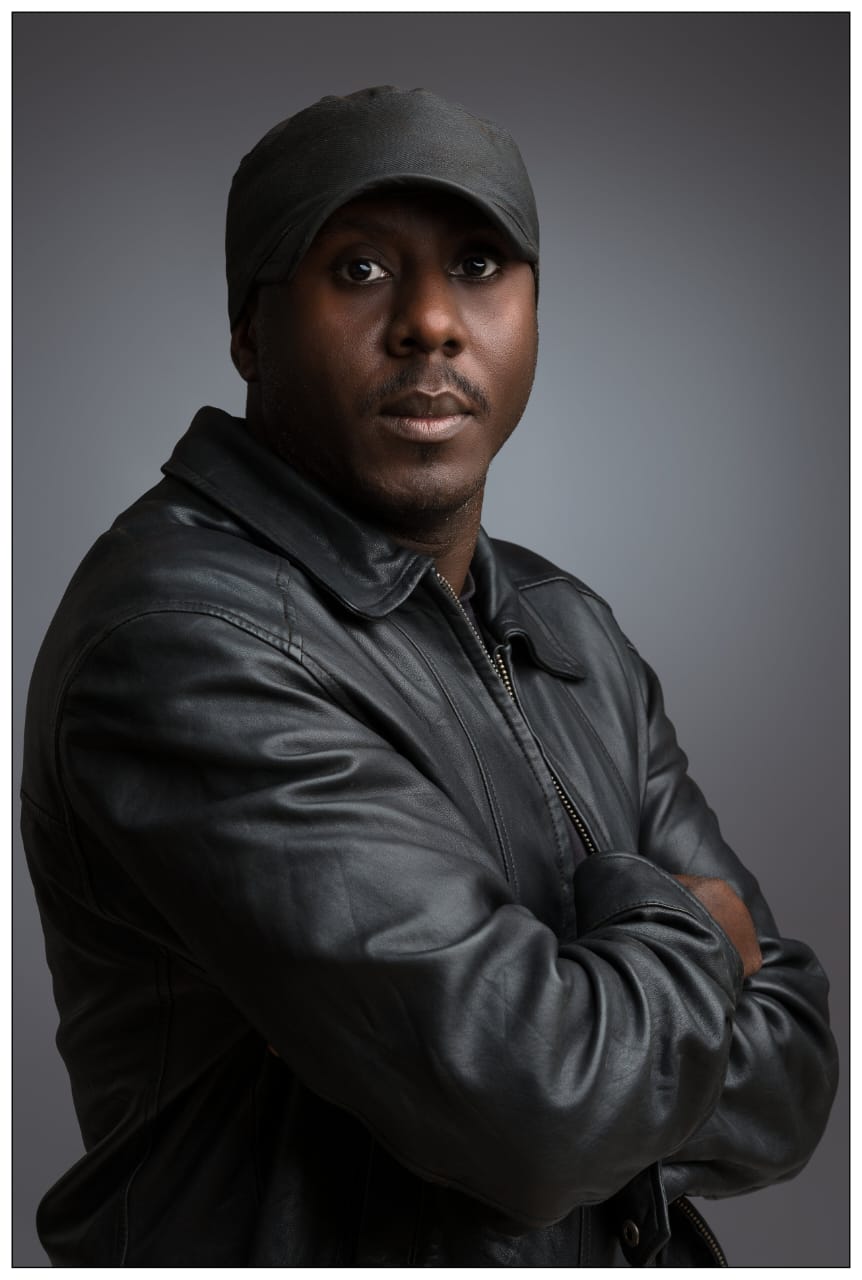
Asakan: First of all, how did you get into art? What’s your background?
Donald Wasswa: My artistic journey began quite naturally through observation and curiosity. I grew up in Kampala, surrounded by everyday objects, encounters, and landscapes that carried strong visual and emotional significance. As a result, I became interested in how ordinary materials and environments could convey deeper stories about memory within society.
Over time, this curiosity evolved into a committed artistic practice. I remember that, as a young person, I enjoyed flipping through magazines and watching a little TV. But I didn’t yet know that I wanted to be an artist.
Today, my artistic journey is rooted in contemporary visual art, with a strong focus on sculpture, installation, and painting, building on my training at Kyambogo University. And even though my work has evolved over the years, it explores how art can become a space for reflection on social and environmental realities.
Asakan: You are currently one of six artists participating in the inaugural exhibition “Matière à abstraction, Echo à l’histoire d’un lieu” at the Galerie CHRISTOPHE PERSON in Paris. How is abstraction reflected in your exhibited works?
Donald Wasswa: For me, abstraction is a way to create space for interpretation. It allows me to move beyond direct representation and interact with ideas through gesture, texture, rhythm, and composition.
My paintings in the exhibition “Matière à abstraction, Echo à l’histoire d’un lieu” are inspired by recognizable forms. They come from nature and everyday life. They are also intentionally fragmented and arranged. I hope viewers will sense something familiar, but that they will also pause to question what they see. This creates a dialogue between the artwork, the space, and the viewer.
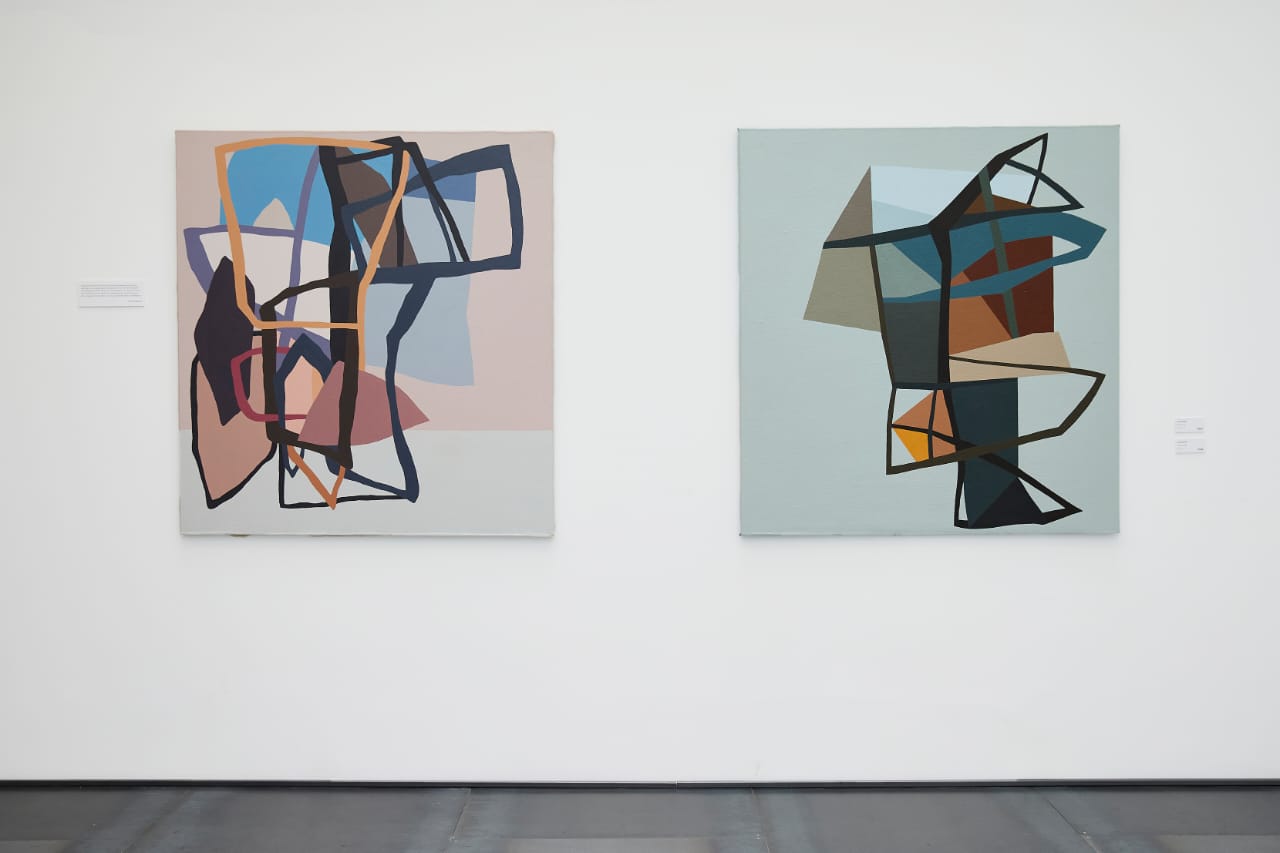
View of works by Donald Wasswa—Exhibition “Matière à abstraction, Echo à l’histoire d’un lieu,” PERSON Gallery, Paris. Photo credit: Mona Awad
Asakan: “Still Life,” the series of paintings you’re presenting here, has its origins in the installation you showed in 2019 during your participation in the first edition of the Ouagadougou International Sculpture Biennale. What led you to transition from the chair-based installation to painting?
Donald Wasswa: When I created the installation, of course, it was more closely tied to the site of the Ouagadougou Sculpture Biennale. I didn’t need to transport all the objects or materials I was using from one place to another, which made it easier to create this type of work in that space. However, I had the idea of continuing this series in a different way.
So, when I returned home and explored different mediums, I ended up creating these paintings with the same kind of message as the ones I’m currently exhibiting at Galerie PERSON. It just happened quite naturally.
Asakan: Speaking of objects and materials, how important is it to you to highlight global challenges related to nature in contemporary art?
Donald Wasswa: Environmental issues are no longer distant concerns. They are immediate and shared realities. Art certainly cannot offer direct solutions, but it can foster awareness, reflection, and an emotional connection. Thus, my work explores the tension between human progress and our relationship with nature, and how the environment holds us accountable for our choices.
Asakan: Can you explain the creative process you used to create each of your paintings?
Donald Wasswa: My creative process begins with observation and gathering ideas. Then I gather the materials I might use in relation to what I want to communicate. And since I’m constantly switching between different disciplines, this will, of course, depend on what I want to say and the most practical way for me to convey that message. This makes my approach a bit more spontaneous.
So, to put it simply, when I have an idea, I immediately start painting on the canvas and layering different colors. Then, little by little, I remove the colors that don’t interest me, one by one. It’s like a masking process where I start eliminating the colors or shapes I don’t want until I arrive at something familiar. But sometimes, I don’t know when the painting will be finished. It’s the canvas that tells me when it’s the right time to stop, and that’s when I stop.
Asakan: Your work thus explores the influence of humanity, science, and technology on our societies today. Is our humanity really in such peril? If so, why?
Donald Wasswa: Absolutely. Humanity is facing crucial challenges. Science and technology, in particular, have transformed our lives in remarkable ways, but they also challenge the way we create, connect with one another, with nature, and with ourselves. So, the concern isn’t technology itself, but how we choose to approach it. My work therefore invites us to reflect on balance—how to move forward while remaining connected to empathy, vulnerability, and collective responsibility.
Asakan: What are your other sources of inspiration? Which artists influence your work?
Donald Wasswa: I draw inspiration from everywhere and everything, but to be specific, I’m inspired by nature, architecture, urban environments, history, and ordinary objects that bear traces of human presence. I’m drawn to materials and forms that seem familiar yet are symbolic.
Contemporary African artists are also particularly significant in shaping my perspective. I’m thinking in particular of those whose work combines abstraction with emotional and conceptual depth.
I also have a fondness for postwar artists from the 1950s and 1960s, such as Mark Rothko, Jannis Kounellis, Johan Michel, and many others.
Asakan: What, then, do you hope the public will take away from visiting the exhibition “Matière à abstraction, Echo à l’histoire d’un lieu” at Galerie PERSON Paris?
Donald Wasswa: The exhibition creates a dialogue around material abstraction and memory. So, through my work, I hope viewers will feel invited to slow down, spend time with the paintings, and offer their own interpretations.
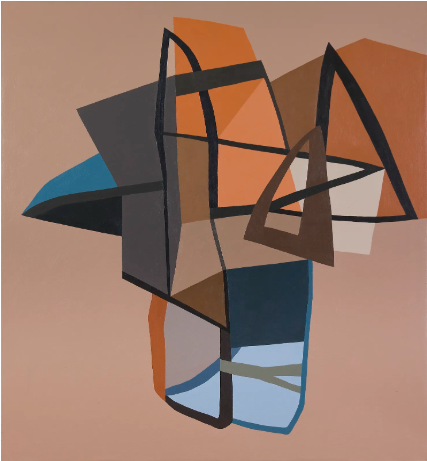
Donald Wasswa, “Still Life 25,” 2025. Acrylic on canvas, 140 x 130 cm (signed and dated on the back). Courtesy of the artist and Galerie PERSON. Photo credit: Mona Awad
Asakan: Is art that important in our lives?
Donald Wasswa: Yes, art is absolutely important. It helps us feel, question, remember, and imagine. It creates connections between cultures and generations and reminds us of our shared humanity.
Asakan: Do you have any advice to share with young artists who would like to learn from your experience?
Donald Wasswa: My only advice to young artists would be to stay curious and engaged, to develop their own visual languages, and to trust their creative processes.
Above all, they shouldn’t rush to follow trends or seek recognition. Experimentation is very important, and being open to learning in all its forms can be extremely helpful. They should also remain honest in their work.
Asakan: Any final thoughts?
Donald Wasswa: I’m grateful to be part of this exhibition and to share my work with other artists. For me, art remains a living dialogue between artists, material memory, and the present, as well as between people across different places and experiences.
Exhibition “MATIÈRE À ABSTRACTION: Echoes of a Place’s History” featuring artists Donald Wasswa, Joseph Ntensibe, Mamadou Cissé, Tiffanie Delune, Paul Ndema, and Ghizlane Sahli, April 17–August 1, 2026, at GALERIE PERSON, 22, rue du Bac – Paris 7th Opening hours: Tuesday through Saturday from 11:00 a.m. to 7:00 p.m. or by appointment. christopheperson.com
À lire également
Yasmine Kechad: “I would describe KECHAD as an independent organisation that allows me to engage with art in different ways, depending on the artists, the projects and the people I meet.”
The newly launched KECHAD platform is participating in its first Paris Photo fair through November 15, 2026, in collaboration with the Carole Kvasnevs…
Agi: “Through this exhibition, I wanted to pay tribute to these Amazons, symbols of strength and resilience.”
At La Maison Rouge in Cotonou, painter Agi (born in Paris in 1971) is presenting, through November 29, “Les Merveilleuses,” an original exhibition cel…
Raymond Tsham: “Belgians and Congolese, Africans and Europeans—we must overcome the divisions of history, unite, and foster genuine complementarity among our peoples.”
Featured in the exhibition “Living Legacies: Reinventing Forms” at the Galerie Person in Brussels alongside Mozambican artist Reinata Sadimba, Raymond…

Joseph Ntensibe: “… I try to capture the dramatic effect of tropical light on nature and translate that experience into painting.”
Today marks the final day of the group exhibition featuring the renowned Ugandan painter Joseph Ntensibe—who trained at the Makerere University School…
Commentaires