Le Grand Entretien
Christophe Person: “My goal when I exhibit an artist’s work is to show how a subject that at first glance seems specific to a particular geographical reality can also convey a universal message.”
A leading figure in the contemporary art scene and co-founder of the Ouagadougou Sculpture Biennial (BISO), Christophe Person opened Galerie PERSON in Paris in December 2022 to champion artists from Africa and the African diaspora. Three years later, the gallery expanded with the opening of a new space in Brussels. In this interview, he shares his story of the deeply personal and passionate struggle that drives him and offers an uncompromising perspective on the contemporary African art market.
Asakan: Tell us a little about yourself, your background, and your first experience with art.
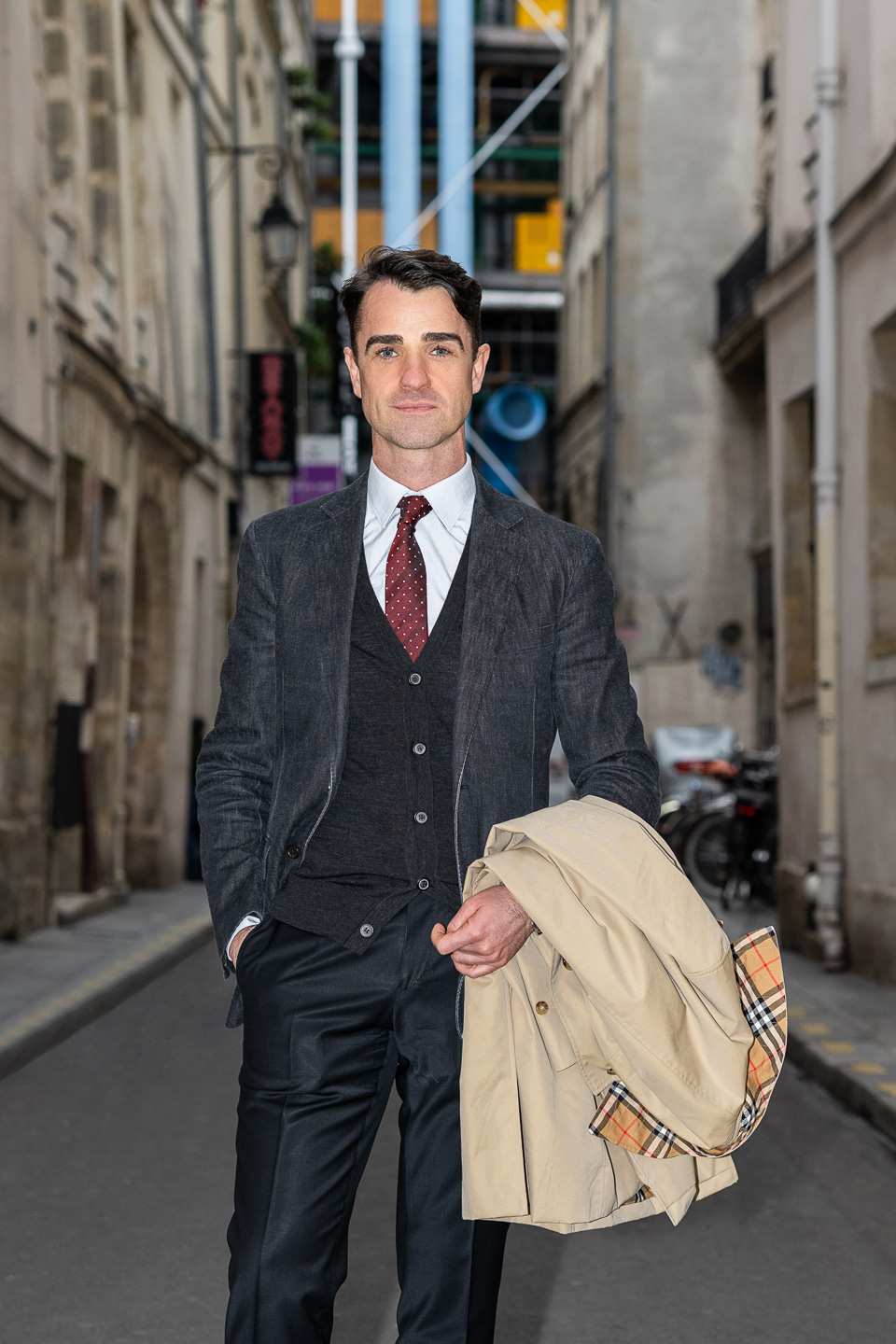
Christophe Person: After about ten years of experience in the financial sector, I decided to pursue my passion for artistic creation by making a radical career change to embark on a completely new path in the art market. I left my position at a banking group in Paris to pursue a specialized master’s degree in Art Law and Business in London at Christie’s Education. It was during this program that I deepened my knowledge of the contemporary African art market. Upon graduation, I had the opportunity to develop the auction business at Piasa in Paris and later at Artcurial. These experiences gave me the chance to play a central role as an observer of this market.
Asakan: Why did you then choose to become a gallery owner?
Christophe Person: I chose this profession first and foremost because I am myself a collector and an art enthusiast. It allows me to be in touch with the creative process at its source—that is, to engage directly with the artists who are at the heart of the process, as well as with the entire network of stakeholders that make up the artistic ecosystem.
Asakan: What artistic direction do you follow? How do you select your artists?
Christophe Person: After 10 years in this field, I continue to focus on promoting African artists and those from the diaspora. My goal when exhibiting an artist’s work is to show how a subject that at first glance seems specific to a particular geographical context can also convey a universal message.
For example, during the 10th anniversary of the AKAA art fair in Paris, we unveiled the latest series of photographs by the Burkinabé artist Nyaba Léon Ouedraogo, taken at Lake Bazoulé outside of Burkina Faso. This lake is home to an ecosystem that includes nearly 280 crocodiles, which are considered sacred by the local people. The surrounding residents make offerings to these crocodiles and hold them in high regard. When a crocodile dies, a ceremony accompanies its burial near a baobab tree. Today, Burkina Faso is affected by climate change, raising concerns about the lake drying up and the impending extinction of these reptiles. Through this series, the artist poses the following questions: What would happen if the lake disappeared? What would happen if the crocodiles became extinct? By using the specific context of the lake region as an example, Ouedrago confronts humanity with its own destiny.
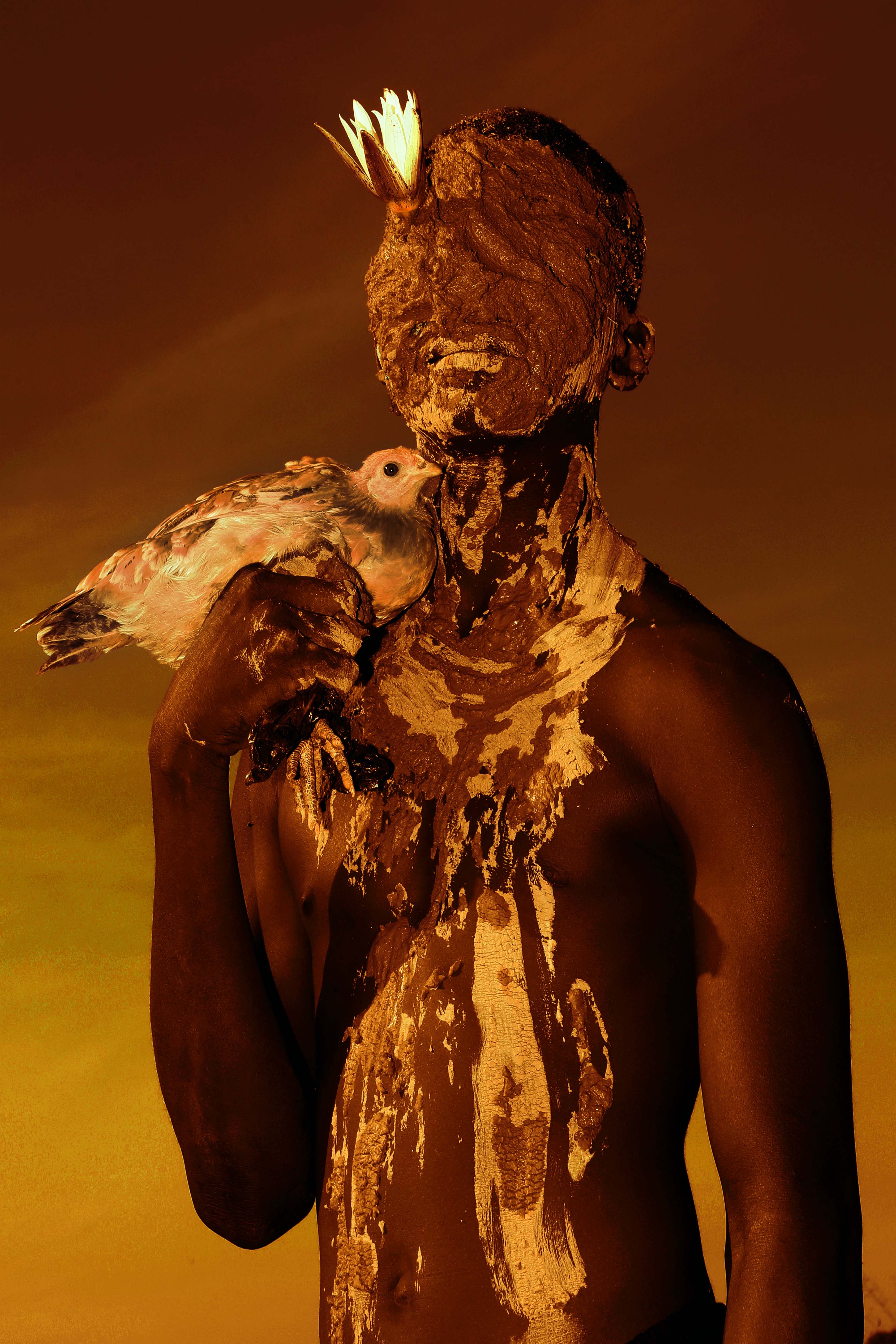
Nyaba Léon Ouedraogo, “La surréalité,” 2025. Hahnemühle Baryta Fine Art Photograph, 100 x 70 cm. Edition of 3 plus 2 artist’s proofs. Courtesy of the artist and Galerie PERSON
Asakan: Of all the ways a gallery can support its artists, which one(s) do you appreciate?
Christophe Person: Any opportunity I have to devote time to artists—to better understand and get to know them—is a great source of satisfaction and discovery. To do this, I try, on the one hand, to travel as much as I can. I generally take advantage of events such as biennials, art weeks, or exhibitions to travel to a country. If there’s no such event, then I travel alone or with others to meet the artists, visit their studios, and get to know local art professionals. Another way to strengthen collaboration with the gallery’s artists is to host them in residency or facilitate their visit. For example, since opening my Brussels space, three artists—Olga Yameogo, Fally Séne Sow, and Arnold Fokam—have been able to come and work in Brussels for a few weeks. Twice at Éric Haegelsteen’s PIC/MOL residency and once right here in my gallery.
Asakan: If we were to ask you to assess your collaborations with your artists, what would you say?
Christophe Person: From my perspective, human relationships are always enriching, whatever form they take, and this is especially true with artists.
Asakan: What about your relationships with collectors?
Christophe Person: Private collectors and institutions are the main sources of funding for artistic creation. The role of galleries is to guide them toward the works of the artists we represent, offering relevant suggestions and demonstrating our conviction in the artistic value of their works.
Asakan: How do you view the African contemporary art market?
Christophe Person: Like all aspects of the market economy, the African contemporary art market is in a state of constant flux. It has enjoyed unprecedented visibility over the past few decades, which has represented a well-deserved catch-up for African art. The market’s interest in African and African American artists has created incredible opportunities for these artists to create, exhibit, and make a living from their work. Quite naturally, the abundance of works of varying quality has led to a certain weariness. This occurred at the very moment when the economy as a whole was severely impacted by the numerous geopolitical upheavals that remain a concern for a large part of humanity even today. Traditional art consumers—such as institutions and private collectors—are not immune to this anxiety. It is for these various reasons that the contemporary African art market is currently experiencing a marked slowdown. The passage of time will help us in the future to fully understand the ins and outs of this phenomenon. This new context is nonetheless favorable to talented artists whose work is meaningful and relevant. Patience, however, is called for today.
Asakan: In your view, what is the greatest challenge that contemporary African art will face in the coming years?
Christophe Person: Over the past 15 years, it’s fair to say that African artists have taken the plunge. It is now up to them to find ways to navigate this ecosystem.
Asakan: What role can governments play in the growth of the art market?
Christophe Person: In the specific case of African countries, support for artistic creation does not necessarily have to be driven by market forces. They can also foster artistic creation by supporting local initiatives that facilitate exhibitions, such as biennials, awards, and annual highlights like art weeks, during which stakeholders can come together. As is the case in a growing number of countries—such as Benin or Nigeria, for example—the creation of museums with permanent collections will undoubtedly bear fruit in terms of promoting African art.
Asakan: What do you think of art fairs, which are becoming increasingly common and seem to be becoming indispensable for galleries?
Christophe Person: Participating in art fairs is necessary to introduce artists to the general public and collectors, at a time when they are less inclined to visit gallery exhibitions. It’s also a very significant investment, the full cost of which is borne by the galleries: booth rental, transportation of artworks, travel and lodging for staff, and on-site expenses—all with an uncertain financial return. This makes it essential to carefully select the fairs that offer genuine value to their clients.
Asakan: How do you envision the future of your gallery?
Christophe Person: Beyond the gallery itself, I hope to serve as the driving force behind an integrated system centered around our two exhibition spaces in Paris and Brussels, promoting the work of the artists I represent through multiple channels. This involves curating thoughtful exhibitions, for which I sometimes seek outside assistance to offer a fresh perspective on the artists’ work through written texts or curatorial insights. It also involves supporting artists with their applications for awards and residencies, so as to introduce them to key players in the international art world. Finally, it involves participating in events and organizing exhibitions in Africa, as we have done on two occasions as part of the two OFF programs during the most recent Dakar Biennale. Support for BISO, the Ouagadougou Sculpture Biennial—whose fourth edition will take place in November—is part of this strategy, offering artists a creative retreat lasting several weeks in Burkina Faso.
One of the gallery’s artists, Thiémoko Claude Diarra, is participating and developing a project centered on animism. For Diarra, whose father was a traditional sculptor in Mali and whose mother was a nurse in Belgium, this is a sort of return to his roots. He is interested in how a contemporary artist might address animism in 2025 by integrating traditional techniques with our current scientific understanding of the universe.
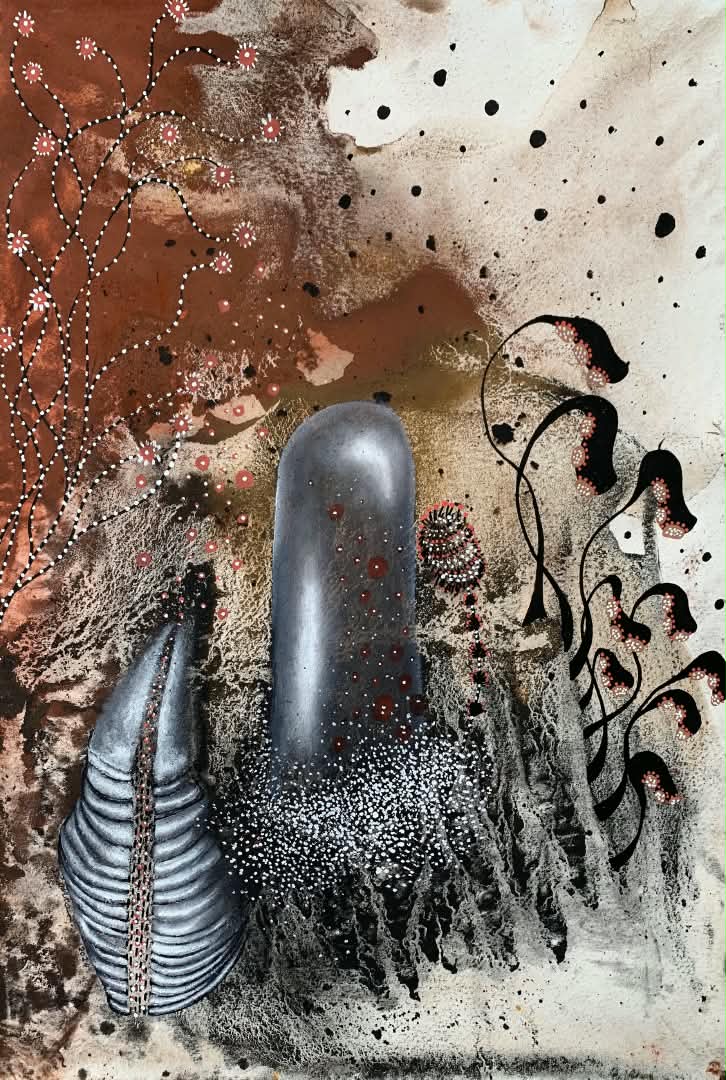
Thiémoko Claude Diarra, “The Intruder,” 2025. Earth pigments on paper, 29.7 x 42 cm. Courtesy of the artist and PERSON Gallery
Asakan: In your opinion, why is art so important to our lives?
Christophe Person: Art is important because, through their works, artists speak to our unconscious. They make us reflect on universal social issues, even if the subjects they address are specific to a particular period or geographical region. They offer us a close-up view of the creative process.
Asakan: What advice would you give to those who wish to follow in your footsteps?
Christophe Person: Take a long-term perspective.
The PERSON Gallery is located in Paris at 22 rue du Bac, 75007, and in Brussels at Rue Émile Claus, 63, 1180 Uccle. For more information, visit christopheperson.com or follow @christopheperson on Instagram.
À lire également
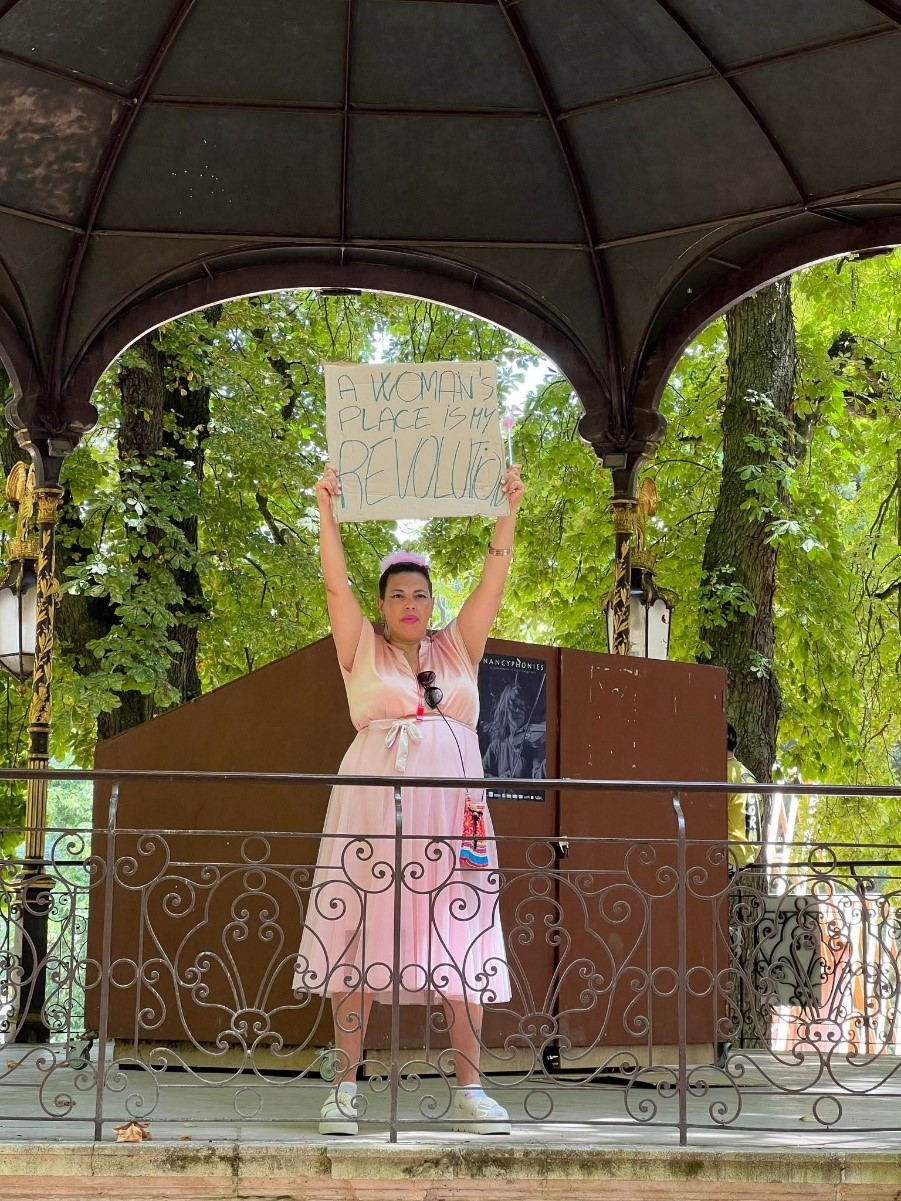
Aïda Patricia Schweitzer: “I had no choice but to fight, and subsequently, more broadly, to reject and denounce injustices, including the neglected realities faced by women.”
Known for her spectacular performances that explore the conditions faced by women in our contemporary societies, Aïda Patricia Schweitzer—a self-taugh…
Nana Poulot: “Black Art in Japan is aimed at anyone who wants to develop opportunities, create or strengthen ties between these cultures, and foster this artistic and commercial dialogue in a space for meeting, (re)connecting, and
At just 23 years old, Nana Poulot has already made art her uncompromising calling. After gaining extensive experience in the field, she decided to con…
Marie-Sophie Eiché-Demester: “I’m very lucky because the artists I collaborate with are building amazing international careers.”
As an art advisor to private individuals and public organizations and a founding member of the ATOKE Association—Les Enfants de Saint Dominique, which…
Agnès Brézéphin: “I don’t create activist art in the strict sense; I create art that focuses on healing and resilience.”
Agnès Brézéphin is the first Caribbean artist to win, on November 7, 2024, of the Léopold Sédar Senghor Grand Prize at the Dakar Biennale, with a priz…
Commentaires