
Conversations
With Martinican Visual Artist Dominique Beroard
Like her older sister, Jocelyne Beroard, lead singer of the group Kassav, Dominique Béroard is an artist—perhaps less well-known—whose multidisciplinary art has resonated for some thirty years, reaching far beyond the Caribbean as a whole. Like an alchemist, she transforms and elevates her materials to imbue them with poetry, delicacy, her wounds, her scars, and the processes of healing and rebuilding—in a style that evokes both her native Martinique and her spirit as a traveler. She is our Favorite Artist.

Asakan: To start our interview, would you like to introduce yourself?
Dominique Beroard: I’m Dominique Beroard. I’m from Martinique and I’m a visual artist. I express myself through various media.
My work has evolved significantly, especially after I left my native island in 1998. I began painting as a self-taught artist; I never pursued any formal academic training. I drew inspiration from the countries where I’ve lived: Saint Martin, Mexico, the United States, Corsica…
Asakan: How would you define art? And how do you view contemporary art?
Dominique: I grew up in a family of artists. Art was part of everyday life, and it felt natural. I never questioned it. So, in my case, I can say that art is living; art is life. It’s about making the useless useful!
You don’t “use” a work of art, but it can evoke an emotion, rekindle a small flame within the viewer. It creates a connection with others. As an actor, art saved me during a painful time in my life.
Asakan: When did you realize you would devote your life to art?
Dominique: There were six (6) of us children at home, including four (4) girls. We all took piano lessons for years. My older sister, who taught me to sew at a very young age, drew and painted so well that I admired her without daring to try it myself.
As a teenager, when they had all left home, I found myself alone with my parents. I was always daydreaming, never able to focus, and above all, I dreamed of becoming a painter! Why?
And then the years went by. I was creating, transforming little trinkets and decorations, without even realizing it. After my mother passed away, I couldn’t cope; I had to survive—for my son’s sake. A question then came to me: “What would you like to do that you’ve never dared to do?”
The obvious answer was to paint. I took a class to learn how to use oil paints, and off I went. Since then, I’ve been creating constantly—in new ways.
Asakan: As an artist, how would you define yourself? How did you come to develop your own style?
Dominique: My work is constantly evolving. I explore, I experiment, I discover something new every day, and I learn about myself as well.
I assemble, transform, deconstruct, repair, recycle, and question myself every day. I love materials, volumes, and old or discarded objects. When an object moves me, I always ask myself how I can work with it and transform it. Every piece or object—whether old, worn, used, or well-worn—has a story, and that’s what I love. I enjoy telling stories through my work.
People tell me they always recognize my style even when I’m doing different things, and that never ceases to amaze me. However, I don’t feel like I have a fixed artistic signature—I’m always eager to learn. I find it hard to put my feelings into words; I express them in other ways.
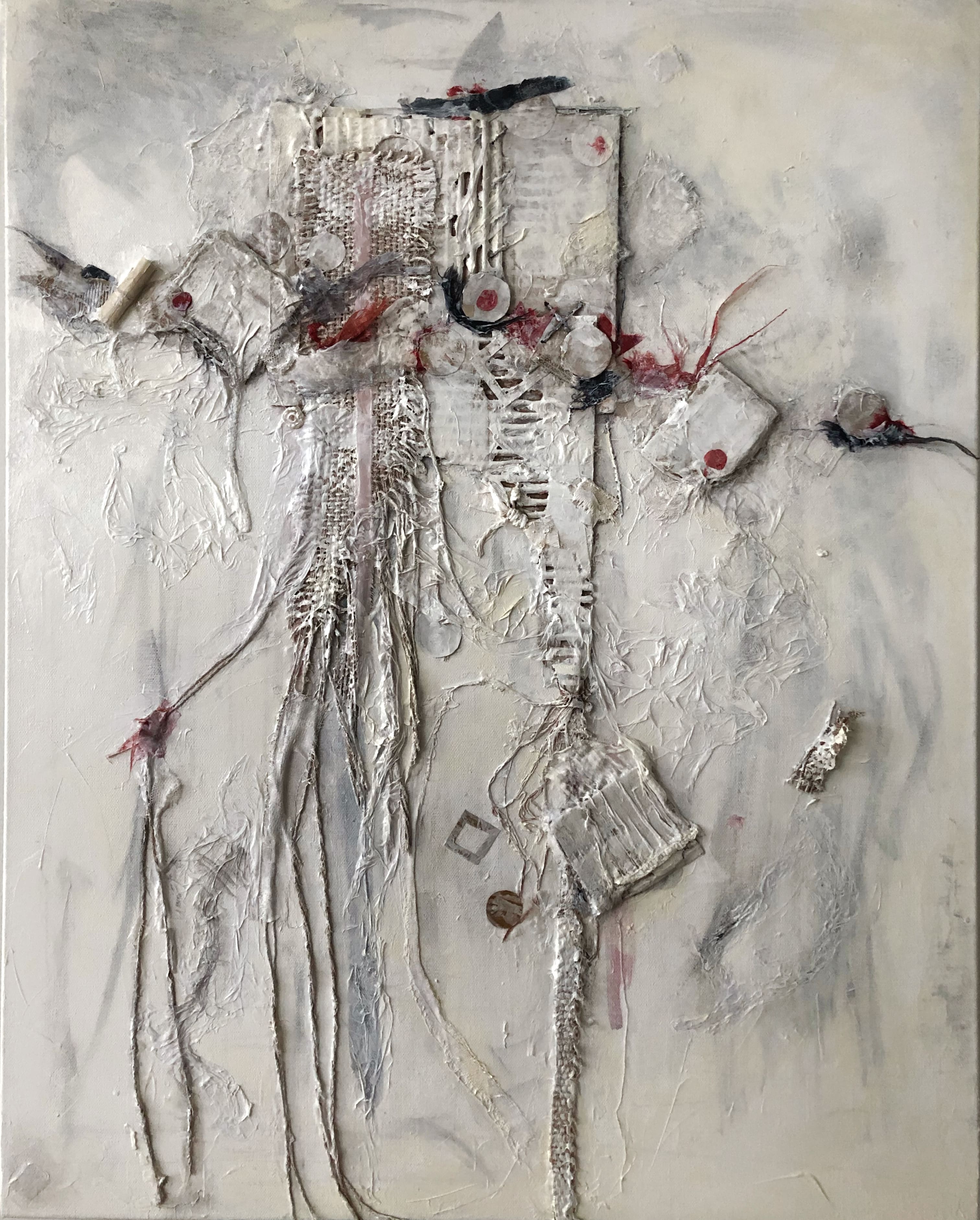
Dominique Beroard, “Biguine,” 2022. Cardboard, fabric, acrylic paint, 76 x 60 cm. Courtesy of the artist
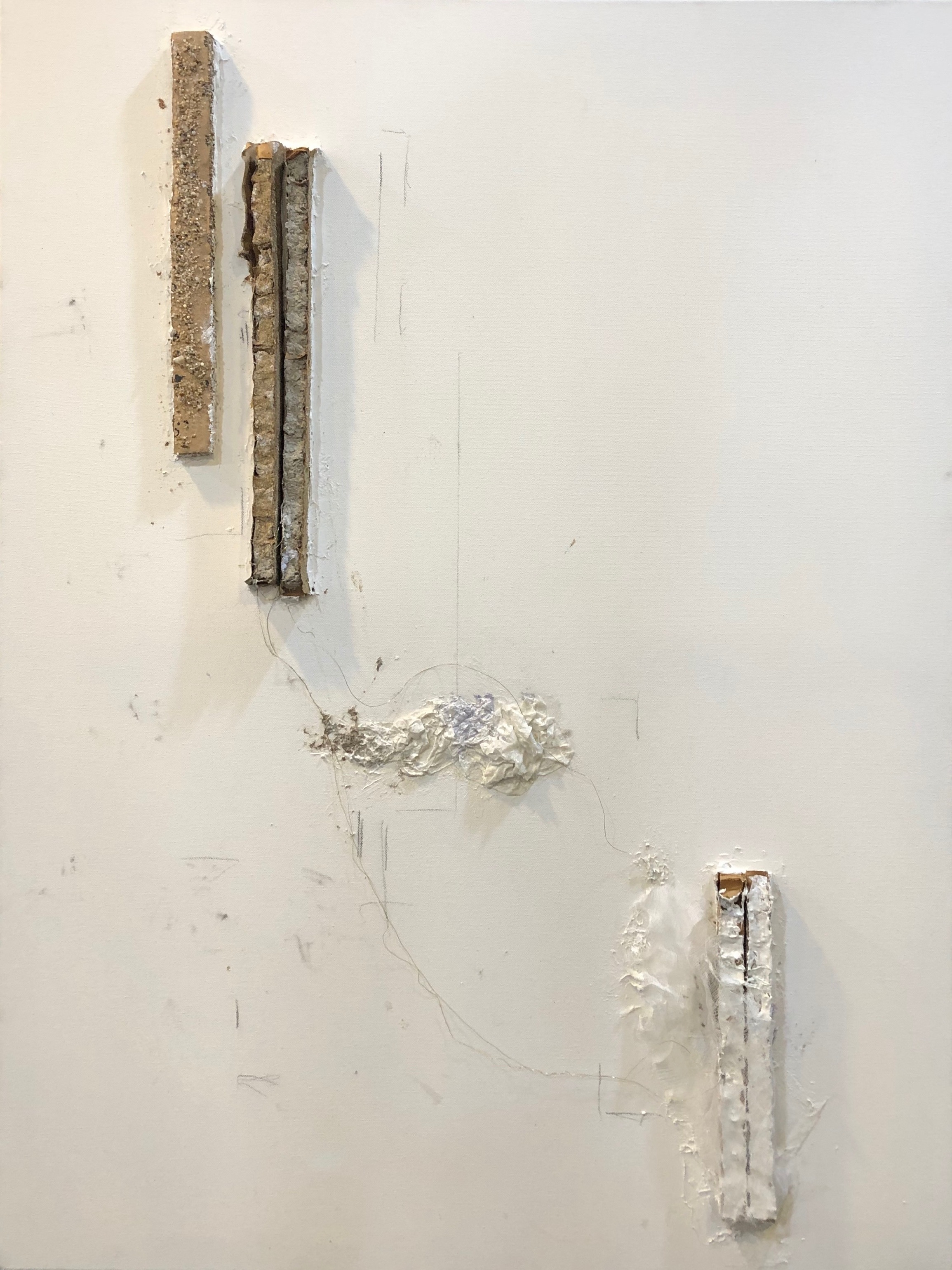
Dominique Beroard, “Conversation Interrompue,” 2021. Cardboard, wire, sand, paper, acrylic paint, 101 x 76 cm. Courtesy of the artist
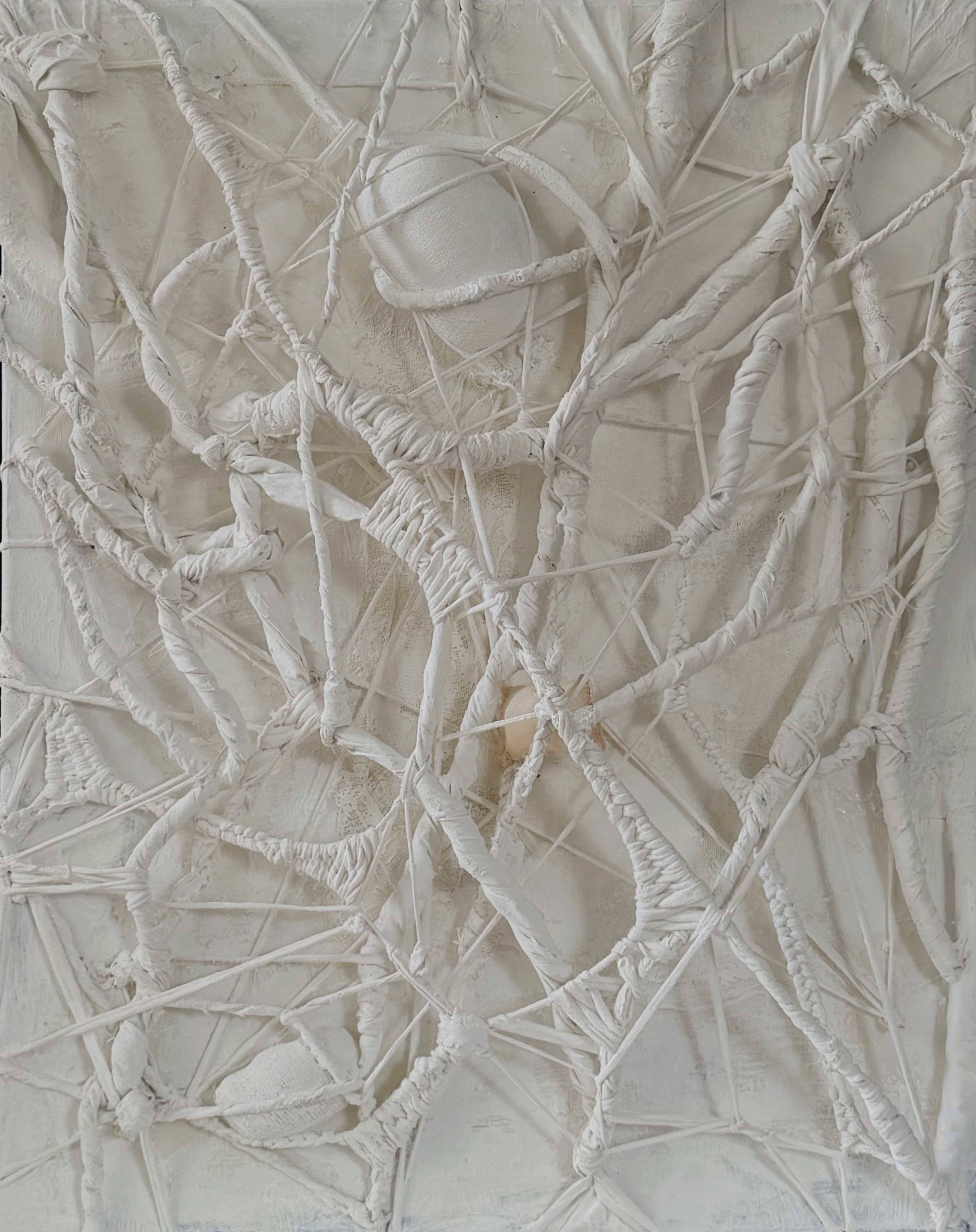
Dominique Beroard, “The Spider,” 2026. Wire, fabric, acrylic paint, 51 x 40.5 cm. Courtesy of the artist
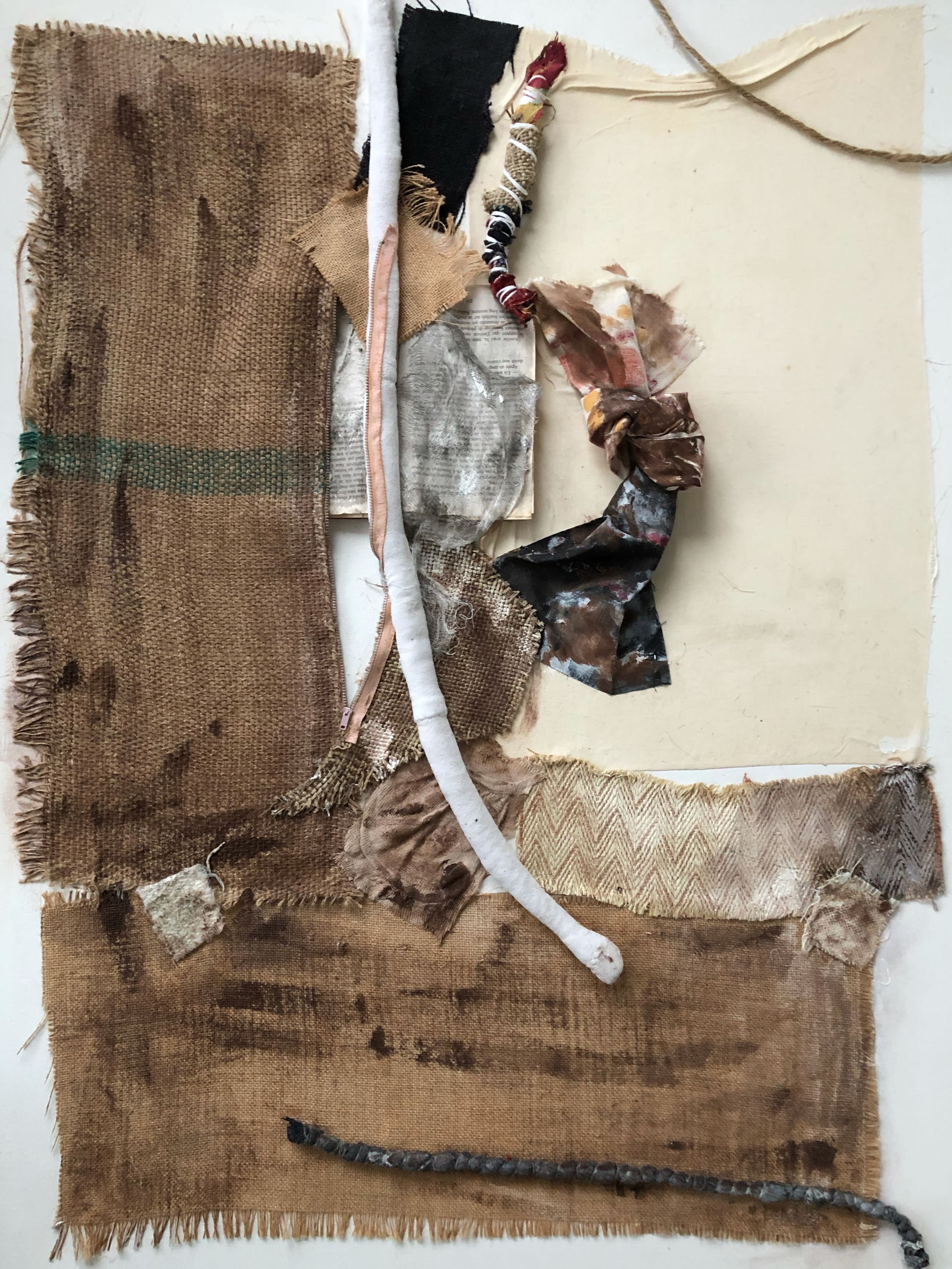
Dominique Beroard, “The Book,” 2021. Fabric, acrylic paint, 101 x 76 cm. Courtesy of the artist
Asakan: What are your artistic inspirations and influences? What themes and emotions do you try to convey in your works?
Dominique: As a self-taught artist, I had to do my own research. Nikki de Saint Phalle had a profound impact on me. Lee Bontecou as well.
I’ve lived in Saint-Martin, Corsica, and Mexico City, where art is ever-present, and these different places have allowed me to develop the body of work that is mine today. When I arrived in New York City in 2009, I discovered Robert Rauschenberg. I enrolled at the Art Students League to meet artists.
But I really enjoy looking at old photos—the hairstyles, the clothes, and the way people carry themselves.
In my work, I want there to be poetry and delicacy without erasing the wounds, scars, repairs, and reconstructions—regardless of the content or subject.
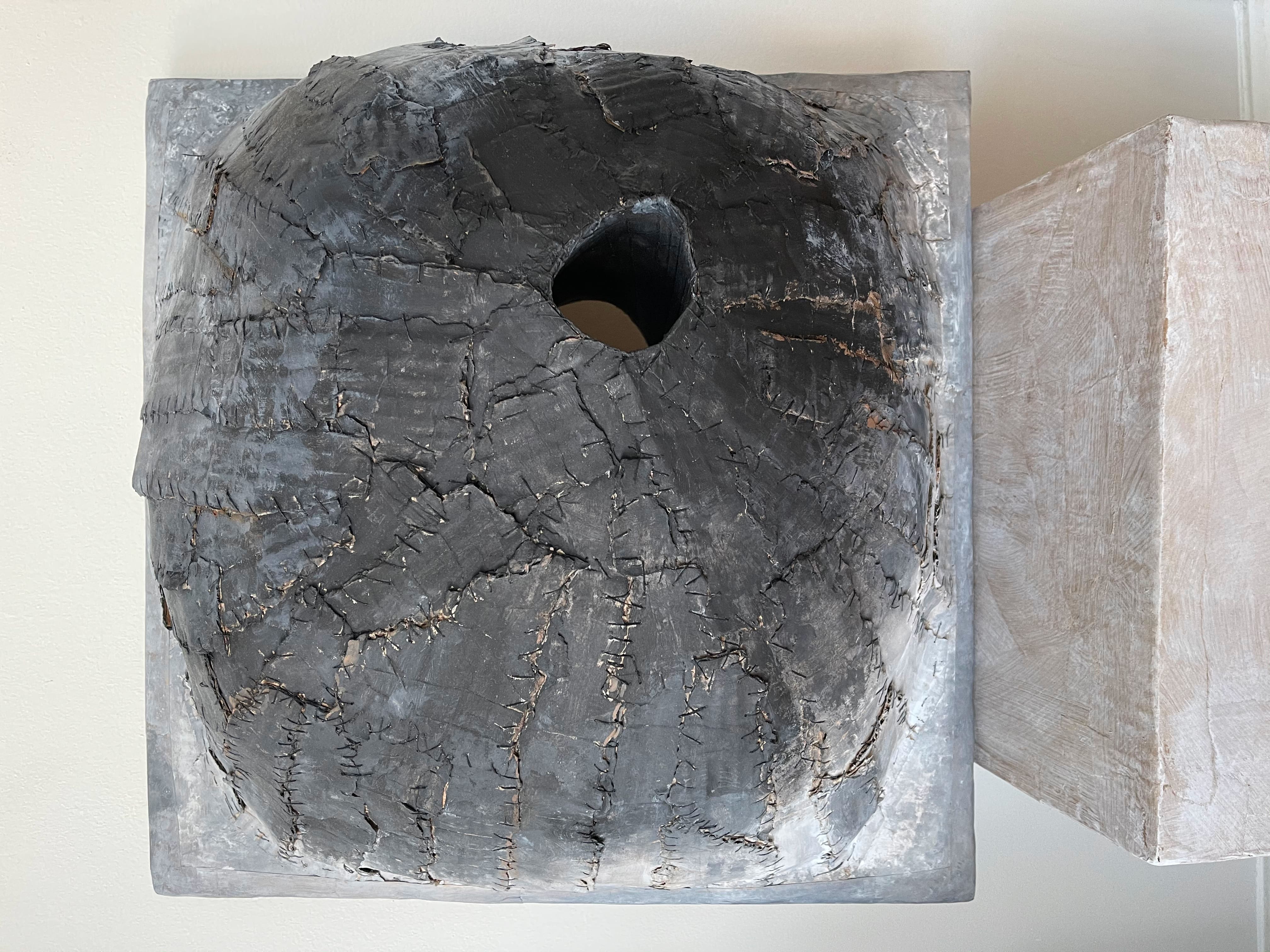
Dominique Beroard, “Le Trou,” 2020. Cardboard, thread, acrylic paint, 50 x 50 x 20 cm. Courtesy of the artist
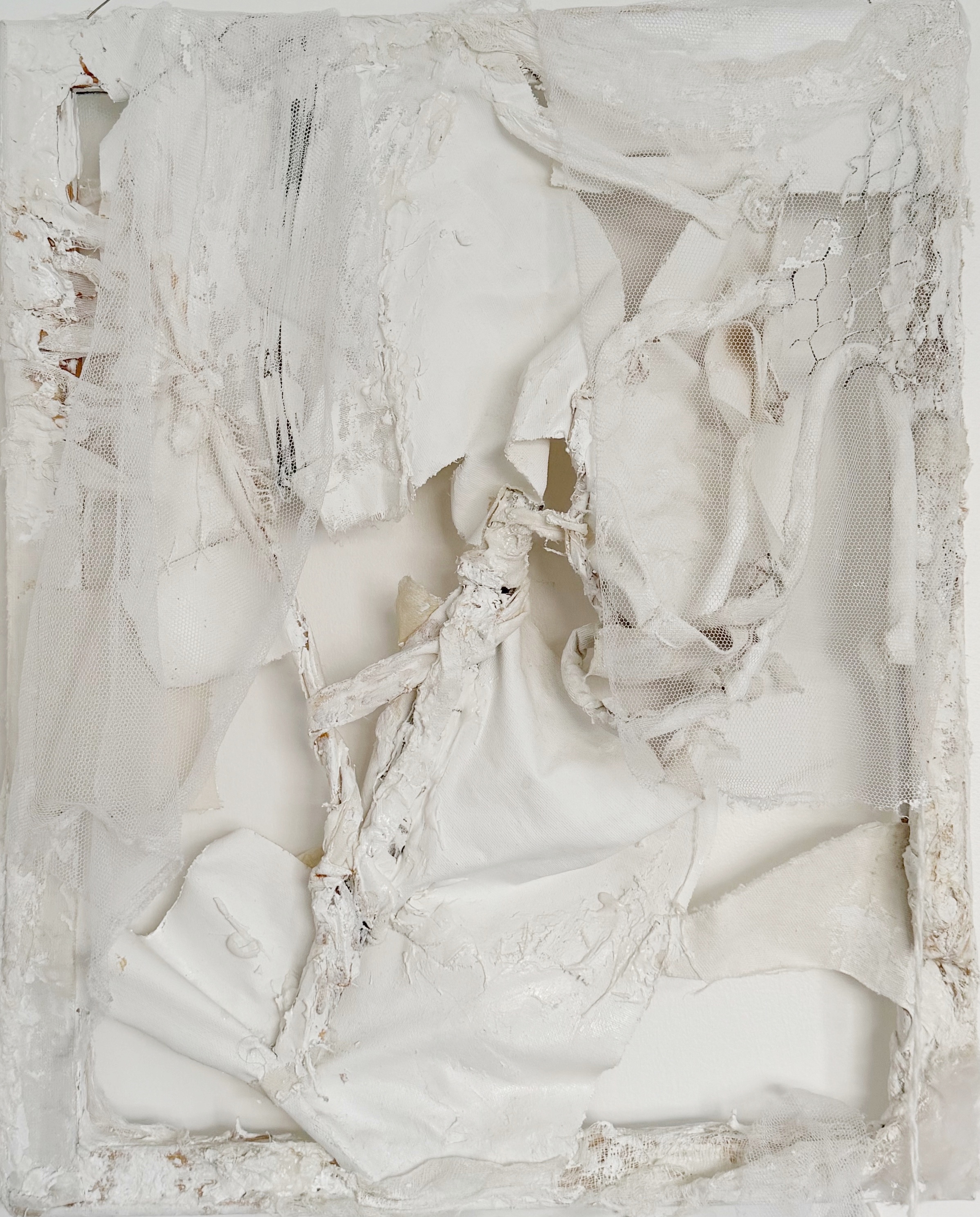
Dominique Beroard, “Untitled,” 2020. Fabric, wire mesh, zipper, acrylic paint, 51 x 40.5 cm. Courtesy of the artist
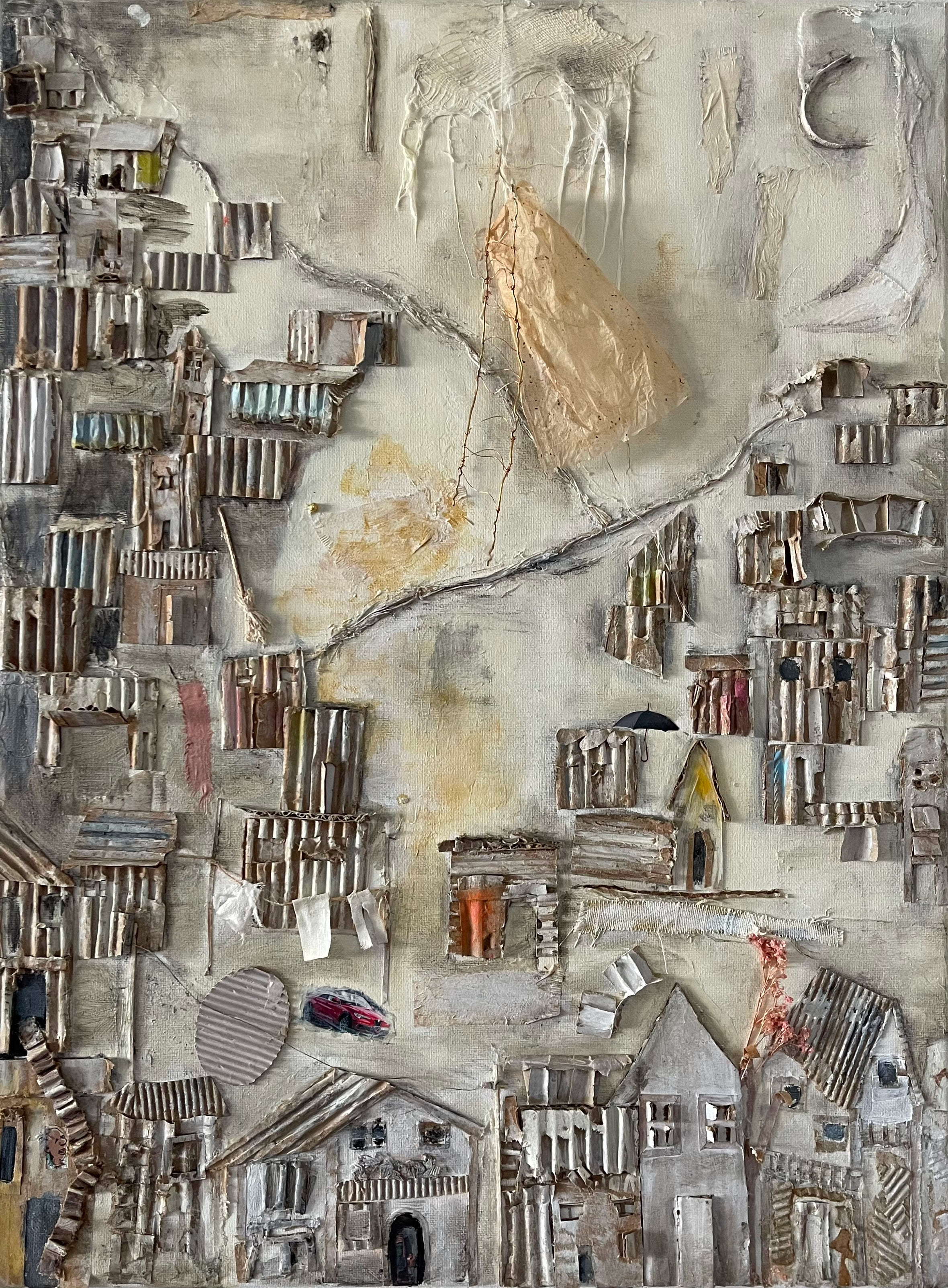
Dominique Beroard, “Trenelle,” 2020. Cardboard, fabric, paper, acrylic paint, 60 x 45.5 cm. Courtesy of the artist
Asakan: How is your work perceived by the public and the art community?
Dominique: That’s a difficult question to answer. I’m surprised every time people comment on my work. During an exhibition at the Grand Palais, I was told twice that my work had a connection to Benin, even though I know absolutely nothing about Benin.
Artists, on the other hand, think my work is baroque—and that’s fine by me!
Asakan: What advice would you give to young people who want to pursue a career in art?
Dominique: If you love something, just go for it! No one’s going to come looking for you. Never wait—it’s a waste of time you’ll never make up for. I know what I’m talking about.
For more information on Dominique Beroard’s work, you can follow him on Instagram @dominiqueberoard.
Commentaires